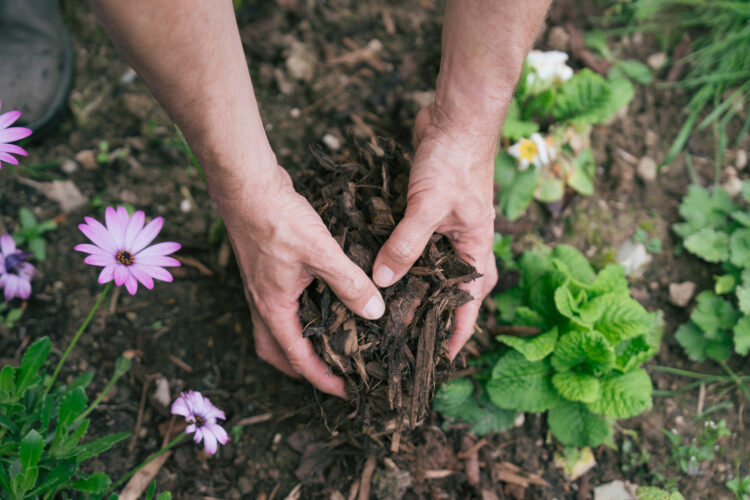
Mulch is a layer of material laid on bare soil to keep it moist and cool. It's like adding a protective blanket. Natural mulch mimics the natural action of plants and how they build a layer around them by dropping their old leaves and seed cases. It is one of the simplest actions you can do in your garden or community space.
Mulch helps with climate repair by:
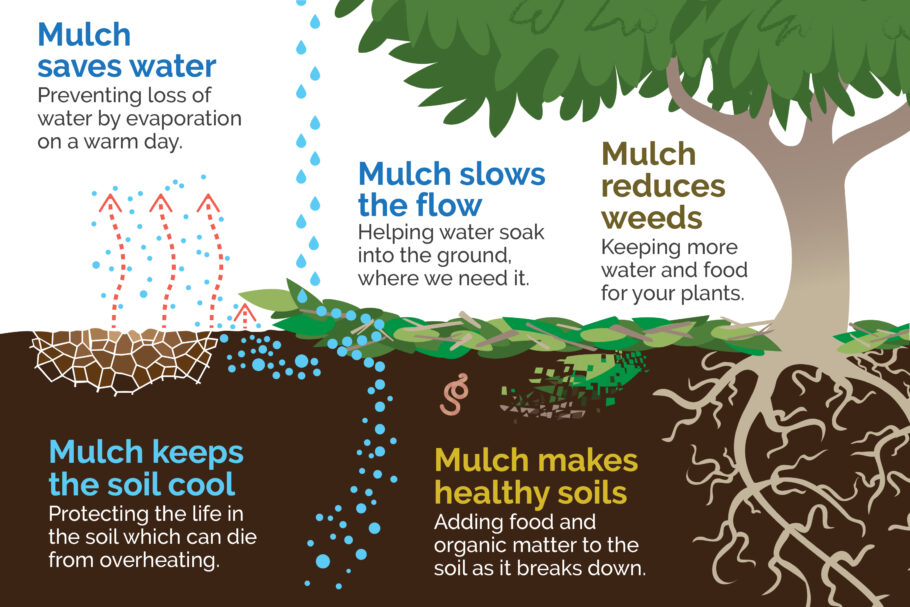
- Keeping the soil moist. When it rains, the mulch slows the water down, letting it soak in and stopping it from running off. It reduces how much water evaporates from the soil surface on a hot day.
- Moderating soil temperatures. It keeps the soil cooler in summer, and warmer in winter.
And as if that isn't enough, mulch reduces weed growth, adds goodness to the earth and looks good too.
Adding mulch is so simple it really is quite hard to get wrong, but there are some things to keep in mind:
- The soil needs to be moist before you cover it with mulch. Water it first if the soil is dry.
- It is best to remove perennial weeds, such as dandelion, beforehand because they will grow through the mulch.
- The mulch layer needs to be at least 5cm deep to be effective.
- Leaving a small gap around trunks and stems will allow the air to flow and avoid the material causing the plants to rot.
- Regular topping up will be required from time to time, especially for materials that rot down more quickly, such as fallen leaves.
Collecting natural materials from your own space or local area is one of the simplest and cheapest ways of adding mulch. This has the benefit of using up materials that you would otherwise have to get rid of, such as grass clippings, and it creates a nice, natural appearance. These materials will break down, which brings the benefit of adding nutrients and organic matter to the soil. They will need regular topping up but this can be good as you will use more of your waste materials.
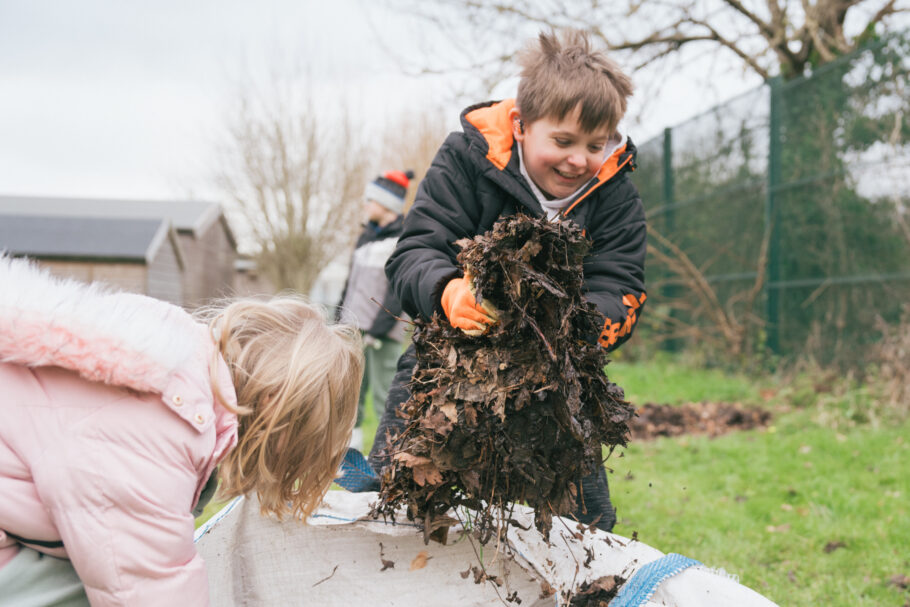
Collecting and spreading fallen leaves is as simple as it gets. It uses materials that you can collect yourself, either from your own garden or in your local area, and they look nice too.
Wet leaves can pack into solid clumps so you may need to loosen the layer from time to time with a garden fork to allow the water and air to move freely into the soil. The leaves will rot down just as they do in a woodland and although this will add more goodness to your soil, it will mean that you need to top them up from time to time.
This is another cheap and easy option that is a good way of using up clippings after cutting the grass. Both cutting and mulching are best done when the grass is dry. Make sure that the mulch is laid in a loose layer.
It can form packed airless clumps in wet periods so may need loosening up from time to time with a garden fork to make sure that water and air can move freely into the soil.
As the name suggests, chop and drop involves cutting your plant trimmings into pieces and dropping them on the ground to form a layer of mulch. It is best done in winter and spring when there are more dead leaves and stems, but it can be topped up at any time. You can use any plant material but it is best to avoid plants that you don't want which are likely to regrow from small pieces, such as bramble.
The chop and drop method returns the nutrients back to the plants you are mulching and avoids you having to move the material away. It relies on having plant trimmings to use and needs regular topping up, but it can be mixed with the other materials mentioned.
Chopped bark is a familiar, long-lasting and attractive mulch material that is easy to source from a local garden centre. You may also find local sources from timber and arboricultural companies. Alternatively, it can be a DIY option if you have access to a chipper. It is not the cheapest option but it is much longer lasting than materials such as leaves and grass clippings.