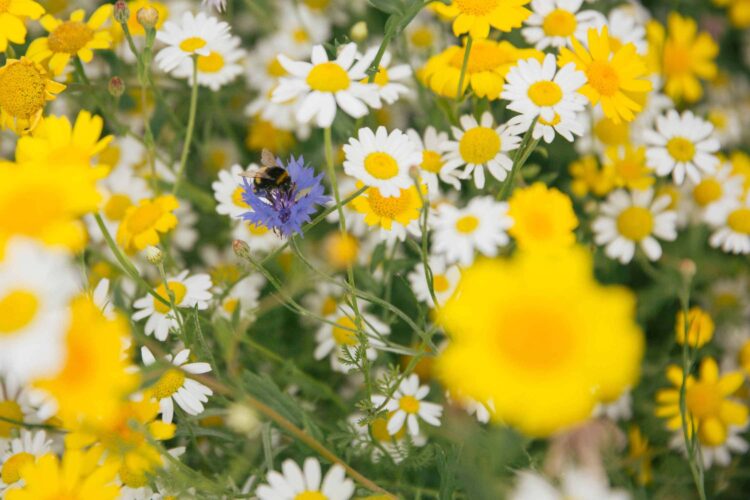
Wildflowers are known for how they attract bees and other pollinators. Less known is how they work every day as climate repairers. Their leaves shade and cool the soil, they capture the rain and slow the water's journey into the ground. The roots create channels and improve the soil so the water can soak in and store safely underground.
There are billions of small plants doing this every day. They grow in some of the most challenging places, and collectively their impact is huge. The great news is they are easy and cheap to grow.
Find out more in our explainer 'Wildflowers, grasses and a hidden story of climate repair'.
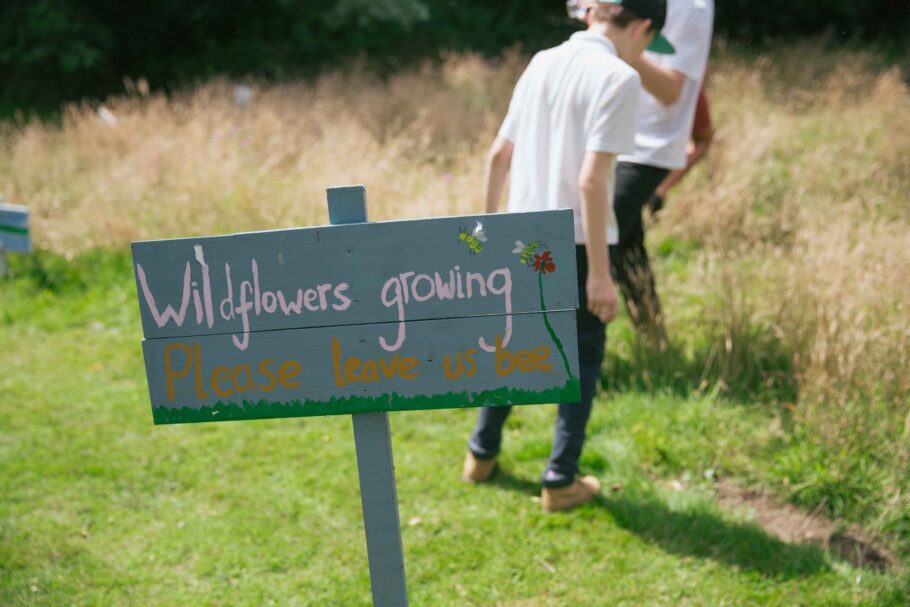
Annual wildflowers include the cornfield flowers, like poppies and corn marigold, that grow from seed each year. Wildflowers are very adaptable and grow in all types of places, from large meadows to tiny unused urban spaces. You can grow them in containers too.
Diversity is key. A variety of leaves cover and cool better and roots of different lengths and patterns improve water absorption. Plants growing at different times of the year capturess carbon and water through all the seasons.
- Wildflowers are very adaptable and can grow in tiny unused spaces. You can support them by sowing seeds and leaving existing plants to grow.
- Wildflowers usually grow best in poorer soil which makes them great for areas where other plants might not grow well.
- You can add wildflowers to a patch of grass, either by sowing seeds into some bare patches or planning in small plugs (young plants).
- You can grow wildflowers in a container, just fill with compost and sow seeds or plant bulbs or plugs, and keep watered.
- It’s best to sow and plant in spring and autumn, fitting with the natural cycle of the plants.
- Make sure the soil is moist before you sow seeds or plant your plugs; water it first if the soil is dry and keep watering from time to time.
- Choose a location that is reasonably sunny and where you can easily water it, at least in the early stages.
- Make a patch of bare soil. You can do this by choosing an area that is already bare, or by clearing a patch of grass
- If using containers, fill these with compost. It is a good way of using up old compost as wildflowers grow well in poorer soils.
- Use a rake or garden fork to loosen up the soil surface. This ensures the seed or young plant roots can bed into the soil and the water can soak in.
Annual wildflowers are the classic ones associated with creating flowery meadows and most wildflower seed packets will contain these. Many are the wild plants that grew in the traditional arable fields and some carry ‘corn’ in their name as a result. Common ones are red poppy, campion, corncockle, corn marigold and cornflower.
It is best to buy from companies with a strong reputation. These will offer different mixes for different soil types and locations, such as mixes for wetter areas.
The best times to sow are spring and autumn when soil temperature and moisture is optimal and there is less competition from weeds.
- Scatter the wildflower seeds. These can be mixed with sand to help you spread them over a wider area and so you can see where they are.
- Lightly rake across the area to help the seeds sink lower.
- Firm the soil to maximise the contact between seed and soil, though take care not to overdo this if the soil is wet as you can compact it.
- Soak with water and continue to water from time to time as the seedlings grow.
To increase the success rate of your wildflower plantings, you can add small plants instead or as well as seed. These 'plug plants' can be bought from suppliers, or you can raise your own from seed and then plant them out.
- Soak the plugs in water before planting, making sure that the roots have fully absorbed the water. If the roots are tightly bound, gently tease them out.
- Make a hole a few centimetres wider and deeper than the plug, then fill and firm the soil around the roots to maximise contact between them. Don’t overdo this if the soil is wet as you can compact it.
- Soak with water and continue to water from time to time as the small plants grow.
- Aim for on around 5-10 plants per square metre, arranged in a random pattern to create a natural effect.
These plants will provide displays of flowers through the summer, while their clumps of leaves are good for climate cooling and calming. They are annuals so while some may re-seed themselves, most will need to be re-sown or re-planted each year. These are chosen for their sensory qualities and for being more climate resilient, tolerating the increasing trend for weather patterns that fluctuate between hot and cold, dry and wet conditions.
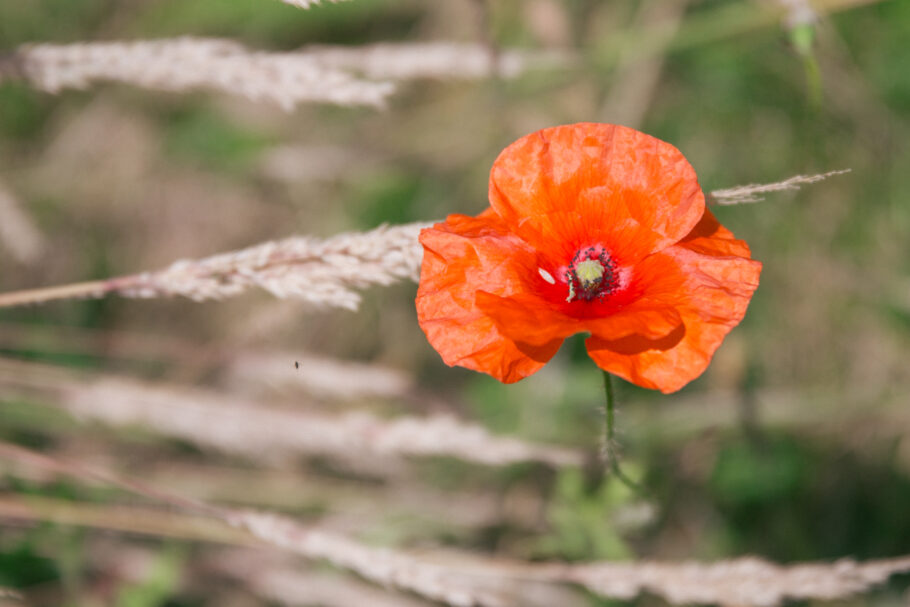
The classic red poppy sets fields alight in early summer. The silky-soft petals contrast with coarse hairy stems and hard, urn-shaped seed capsules. Seeds last a long time in the ground and need light to germinate, so bare soil is important. They make a lot of new seed in autumn.
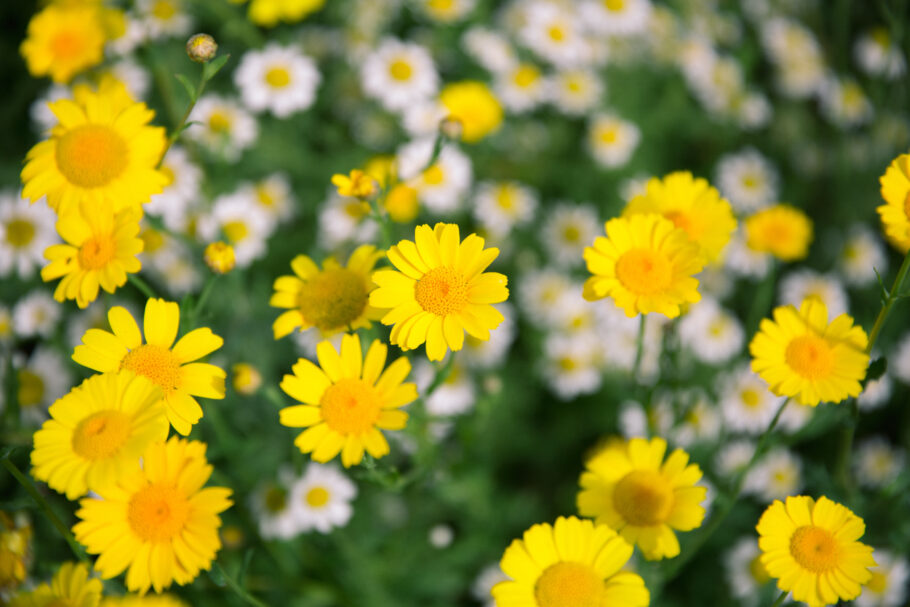
One of the most striking wildflowers with bright yellow daisy flowers sitting above waxy, feathery grey-green leaves. It flowers through summer and is attractive to pollinators. It is easy to grow and a standard ingredient in annual wildflower mixes.
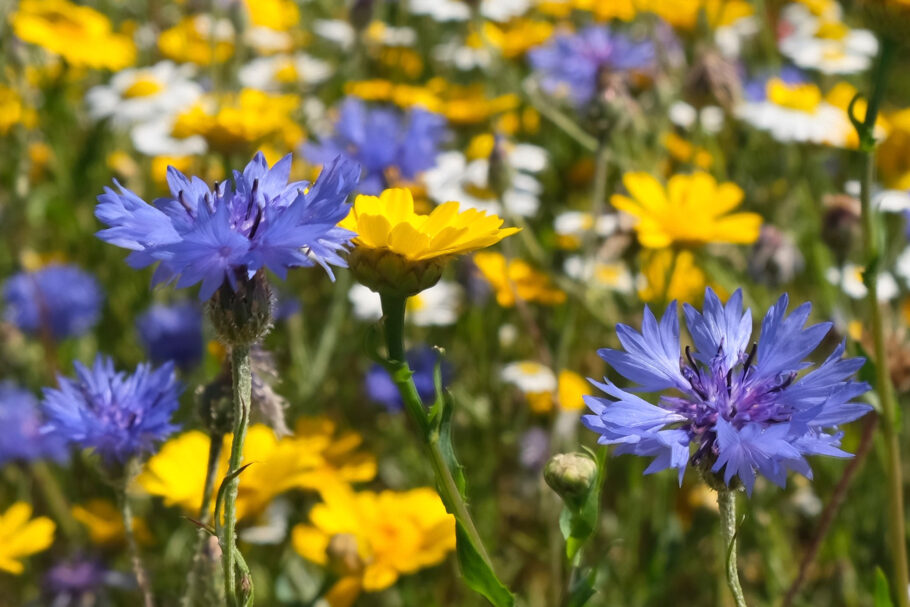
One of the prettiest wildflowers with its mass of intensely blue flowers. Frills of petals surround dark eyes, soft to touch and contrasting with the narrow, wiry stems. The flowers attract pollinatiing insects while the hard seed capsules can be left to attract birds, such as goldfinches.
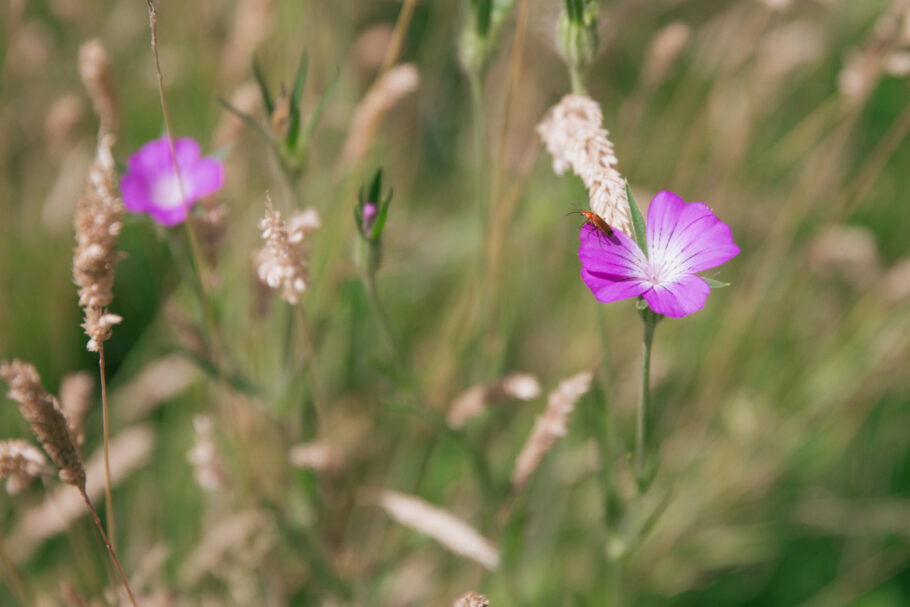
This wildflower is now quite rare in the wild and is sought after for wildflower meadows. It brings white-eyed pink flowers and soft, narrow grey-green leaves through summer, attracting lots of beneficial pollinating insects, including bees.
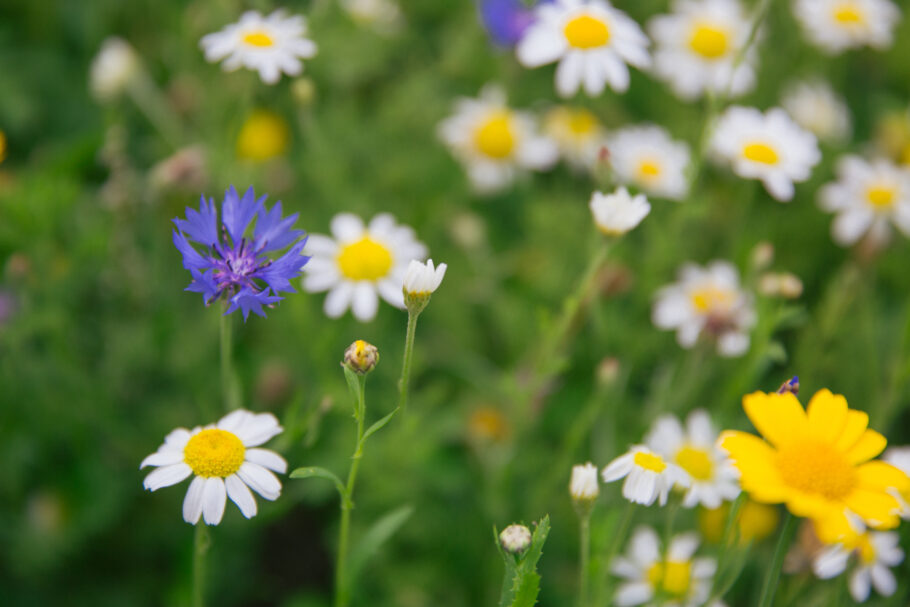
This creeping plant has masses of small daisy-like flowers through summer and autumn and is very attractive to pollinators. The small leaves are feathery and fern-like. When crushed, their scent is strong and pungent.
- ST annual wildflowers