Trees and water in numbers
- A typical tree is around 50% water, some plants can be up 95% water.
- In the UK, a mature tree can transpire between 500 – 2000 litres on a hot day.
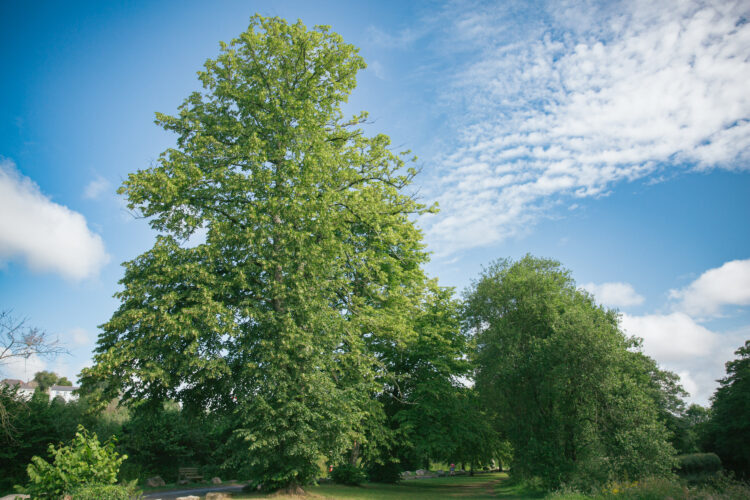
Every day trees are taking action as weather makers and climate repairers. Here we look at the hidden role of trees in keeping the world, and us, cool.
Trees are well known as oxygen-givers, insect-harbourers, and air-cleaners, but there is a bigger yet less recognised action they are doing every day as weather makers and climate restorers. Every day trees help balance the water cycle, calm the climate and repair our planet.
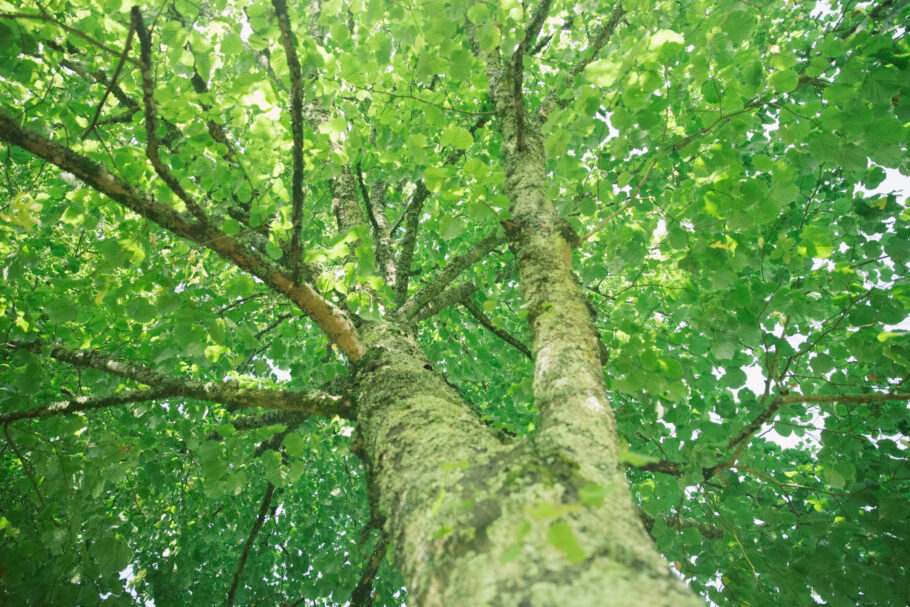
We can experience the relative coolness in a forest or along a tree-lined street on a hot day, yet most of us are fairly oblivious to the significance of what they are doing.
All day, every day, trees are harvesting and storing energy from the sun, using it to slow, capture and release water.
Photosynthesis is the more familiar aspect of what plants do all day. This involves capturing energy from the sun to bind carbon dioxide with water to make carbohydrates. They use some of the carbohydrates as fuel, some to build their own bodies. In doing so they remove two greenhouse gases (carbon dioxide and water vapour) from the atmosphere, which helps the planet reduce trapped heat.
The more hidden story relates to transpiration. This is how trees use the sun’s energy to move water to where they need it, drinking it in from the soil through their roots, and moving it to their stems and leaves. The cooling bit is also the cool bit, which happens when leaves release water from their pores. As this water evaporates from the leaf it takes heat energy with it, cooling the plant, just like we cool ourselves by sweating.
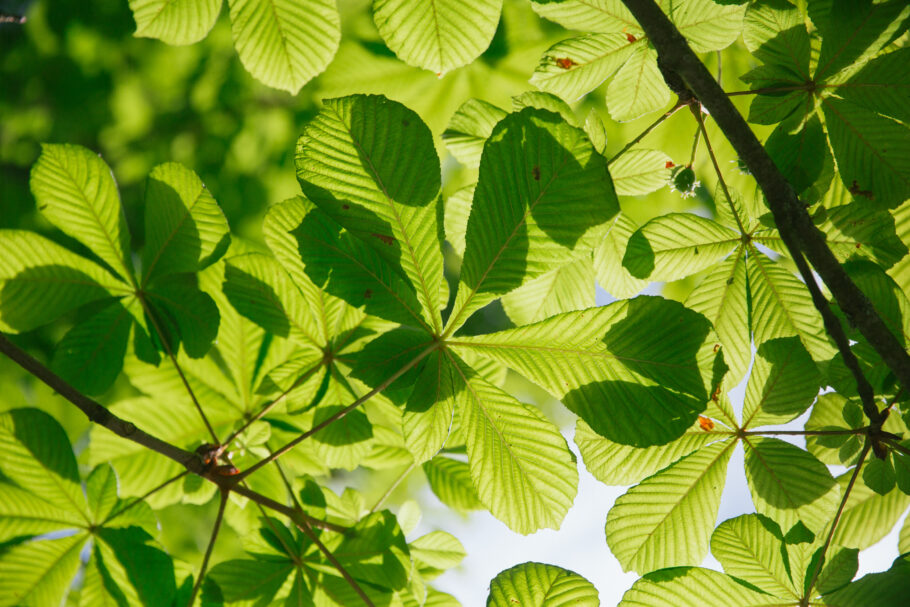
Plants have to keep themselves cool, just as we do, and effectively sweating is how we all do it. When plants do this, they cool not just themselves, but the air around them, and in turn us and the planet.
Transpiration is quite possibly the single most important thing that plants are doing every day. It plays a key role not only in balancing the water cycle but as a vital global cooling process.
As much as 60% of solar heat energy that reaches a plant is used to power plant transpiration alone. This is a staggering amount. It means that most of the energy a plant is using everyday is helping it, and us, stay cool.
If trees were not binding this energy from the sun in organic form and using it to move water, it would be heating the air, the sea and the land, warming the planet, the climate and us. Without the plants and the way they manage water and carbon we would be frying!
Trees and woodlands, and all the smaller plants that live with them, play a vital role in calming the water cycle. They act like giant living rain chains and sponges. Their leaves and trunks make the chains, catching and slowing the journey of the rain to the ground. Their soils, full of life from millions of micro-organisms and decomposing leaves, twigs and fruits, are the sponges. They soak in the water and guide it downwards. In this way, trees and woodlands calm extreme rain events, slow the water and help it infiltrate the soil, reducing flooding and recharging groundwater stores.
Trees play another important role in climate calming. Water vapour in the atmosphere needs ‘seeds’ for the water to condense into clouds or eventually rain droplets. These seeds include dust particles and pollen. Trees are launchpads for the most effective cloud seeds. Bacteria that are released from tree leaves, rise in the winds and seed the clouds, cooling us and bringing water back to earth as regular gentle rain rather than extreme events.
Trees and water in numbers
Go to the park on a hot sunny day and people will be making the most of the cool patches beneath the trees. Plants cool the areas around them through transpiration but also by shading the surface and preventing it from heating up. All plants, even the small ones shade but trees are majestic shaders.
Trees and heat in numbers
Carbon and water are safer in the soil than in the atmosphere; forests and trees take action to put them both where we need them to be.
Eventually when the trees die these carbohydrates are broken down by soil fungi and becomes humus, the dark spongey organic matter that is essential for healthy soils. Humus helps keep soil pores open so that air and water can reach the roots below. It plays a key role in maintaining ground water reservoirs, reducing the impacts of floods and droughts.
In this way, trees slow the flow of water, helping it soak into the ground where it needs to be rather than causing chaos by running off the ground surface.
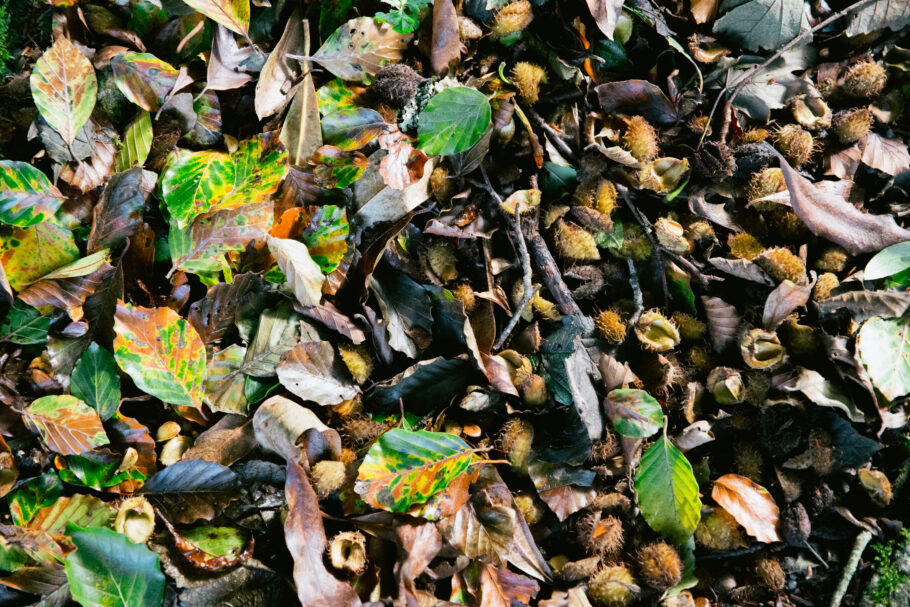
Trees do not usually die with a sudden gasp; they die in small parts every moment of the day. Leaves, fruit and petals fall, fine roots wither and join the soil. Throughout their lives trees are constantly moving carbon into soil stores and feeding soil organisms. Every day, they pump sugars out through their roots to feed fungi who keep the ecosystem healthy. This constant local flow of carbon and sun energy through plants to soil is sometimes called the short carbon cycle.
Carbon that moves underground through this route is used by fungi to make their bodies, to do this they produce a protein called glomalin which is important for long term carbon storage in deep soil layers where it is safe from disturbance such as wildfires. The carbon stored in the bodies of trees makes up roughly half of the tree’s dry weight but it lasts less long as a store than the deep soil carbon because it is more vulnerable to losses through fires and timber production.
We need that carbon to stay in the forest and to help the trees store more as a vital counter to the carbon emissions generated by human activities. It is important to remember that forests are not only trees but complex communities of biodiversity. Until recently, forest carbon measurements have mostly focused on the trees and overlooked other forest plants such as mosses and climbers. We literally didn’t see the moss for the trees. Globally, soils with mosses potentially store 6.43 gigatonnes more carbon than bare soils. It's important not to forget the tiny plants.
Trees and carbon in numbers
Although it is hard to know precisely what the ancient world looked like it is often quoted that we now only have a half to a third of the tree cover that once existed. That means these key regulators of the global climate system are working at half power just when we need them most.
Sadly, deforestation is not just a distant problem, in recent years there has been distressing tree felling episodes around the UK.
Losing plant cover because of deforestation therefore means we lose:
Because of the urban heat island effect and a predicted rise in heat-related impacts, we need trees in towns and cities more than ever. Urban pro-forestation needs to be a thing. Pro-forestation (protective forestation) means protecting the existing trees we have so that they live longer to do more of what they do so well.
The good news is that recent data shows that deforestation rates are falling in many countries and even that forests are expanding in some places. More cities are taking action and planting more trees and other plants as the consequencs of the heat island effect is becoming more apparent.
Every metre counts, every tree counts, every conversation can count too – let us talk more about the water and the trees.
Every tree is taking climate action why not join them?