How mulching contributes to climate repair
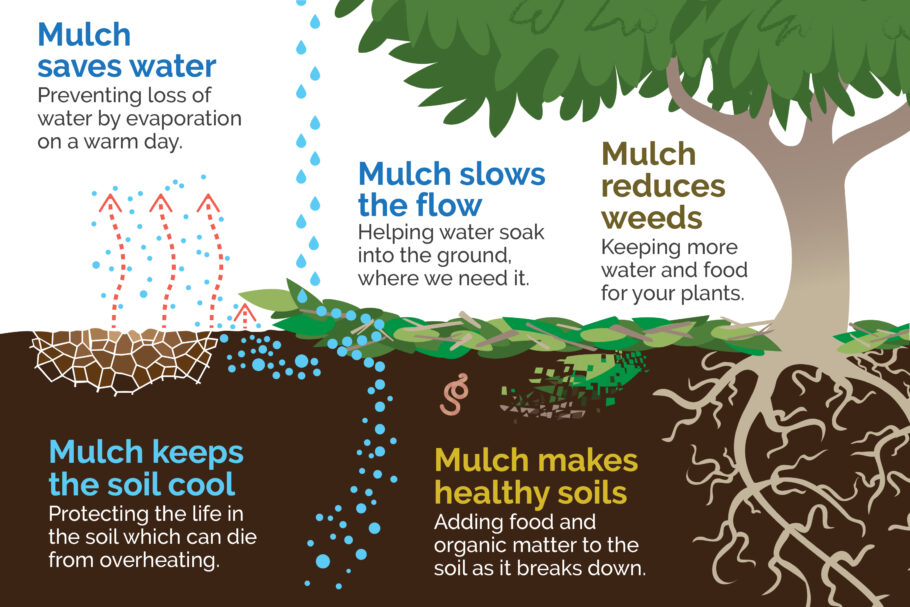
Mulch helps calm and cool the earth in two main ways:
- It slows the flow of water into the soil and traps moisture so the water stays where it is needed, in the ground.
- It keeps the soil cooler in hot weather, and warmer when the weather is cold, protecting plant roots and the life in the soil.
What is mulch and what does it do?
Mulch is a layer of material put on the surface of bare soil. It includes man-made materials, such as plastic sheet, but it is the natural materials that help keep the soil healthy and full of life. This includes non-living plant material, such as shredded bark.
Natural mulch acts as a ‘skin of the soil’, protecting the soil just as skin protects the human body. It slows rainfall and helps it soak into the ground rather than running off the surface. It keeps the ground cool, supporting plant roots and the millions of organisms that make a living soil.
Mulch slows and captures water
If you were to watch rain fall on mulch (how can you resist?) you would see how the irregular shapes of the material disperse the water drops as they fall. At the same time, the air pockets in the material fill with water. Both slow the flow of water into the soil which puts the water where we and the plants need it; in the ground.
The surface of a bare soil makes a crust from the impact of rain drops falling and from drying out in hot weather. This makes it harder for water to soak in and it runs off instead. This is a major cause of floods and loss of soil which gets carried away in the water. It wastes a vast amount of water down the drain, treating it like a waste product rather than the precious resource that all life needs.
Mulch keeps the soil cool in hot weather
Hot weather heats the soil, usually after a few days, and when
the temperature climbs above 300C this starts to damage plant roots
and soil life. During a prolonged heat wave, this damage can be devastating.
Mulch acts as a layer of insulation. It creates a buffer
between the sun’s heat and the soil by reflecting and absorbing some of the
heat. This protects roots and organisms from being damaged by the combination
of high temperatures and lack of moisture.
Mulch also moderates the temperature in cold weather,
protecting plant roots and soil life from the cold.