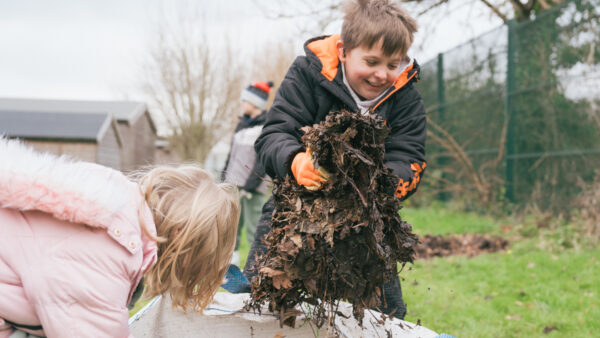
Grass and wildflowers are working every day as climate repairers. Their leaves shade and cool the soil, and capture the rain, slowing the water's journey into the ground. Below the surface, the roots create channels and add organic matter to the soil so the water can soak in rather than running off bare earth.
The more diverse the plants, the better. Leaves of
different heights and shapes cover and cool the soil more effectively. Roots of
different lengths and patterns make for better water absorption. Combining
plants that grow at different times of the year ensures that these actions continue all year.
Adding more wildflowers to areas of long grass is one of the most simple and rewarding actions we can take.
There are three main options.
- Sow wildflower seed. This is the cheapest option but with less chance of success.
- Add plug plants. Plug plants are young plants that have been grown from seed in trays and ready to plant out. They will cost more than seeds, but the results are more reliable. You can raise your own from seed.
- Add bulbs. This is the easiest option. It will cost more but it has high odds of success.
- Open up some patches of bare soil in the grass. You can do this by clearing away some of the grass in patches, or by cutting the whole area very short. This opens up gaps for the wildflowers to grow.
- If the soil is quite compact, use a rake or garden fork to loosen up the soil surface. This ensures the seed or young plant roots can bed into the soil and the water can soak in.
- Scatter the wildflower seeds. These can be mixed with sand to help you spread them over a wider area and so you can see where they are.
- Lightly rake across the area to help the seeds sink lower.
- Firm the soil to maximise the contact between seed and soil, though take care not to overdo this if the soil is wet as you can compact it.
- Soak with water and continue to water from time to time as the seedlings grow.
- Soak the plugs in water before planting, making sure that the roots have fully absorbed the water. If the roots are tightly bound, gently tease them out.
- Make a hole a few centimetres wider and deeper than the plug, then fill and firm the soil around the roots to maximise contact between them. Don’t overdo this if the soil is wet as you can compact it.
- Soak with water and continue to water from time to time as the small plants grow.
- Aim for on around 5-10 plants per square metre, arranged in a random pattern to create a natural effect.
Some wildflowers grow from bulbs and this makes them easy to add to a grass area.
- Use a trowel, or a dibber, and make a hole that is at last twice the height of the bulb. Pop in the bulb, or a group of bulbs, and fill and firm the soil. Don’t overdo this if the soil is wet as you can compact it.
- Soak with water and continue to water from time to time as the small plants grow.
- Aim for on around 10-20 bulbs per square metre, depending on the type of plant. Plant them in a random pattern to create a natural effect. Throwing the bulbs onto the ground and then planting them can help with this, although this works better if the grass is short so you can see where they land.
These plants will provide continued displays of flowers through the summer, while their clumps of leaves are good for climate cooling and calming. They are perennial so will return year after year.
They are more climate resilient, tolerating the increasing trend for weather patterns that fluctuate between hot and cold, dry and wet conditions.
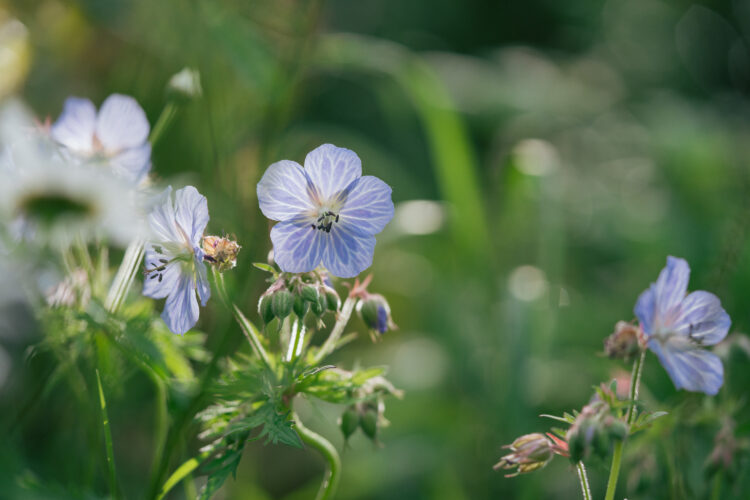
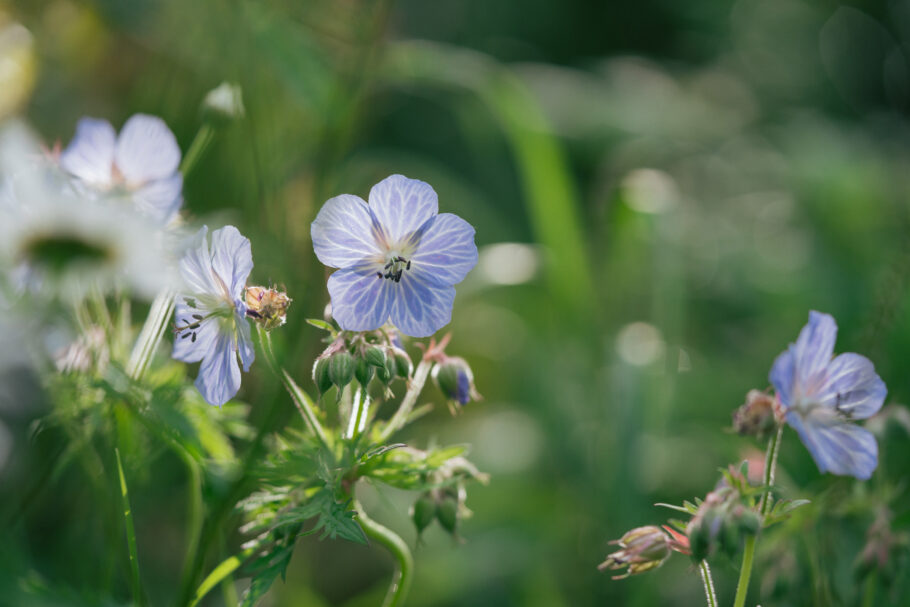
Sprawling stems and palm-shaped deeply cut leaves support continuous displays of soft powder flowers that are silky to touch. The seed heads emerge like pointed beaks, hence the common name cranesbill. They are common along verges in summer.
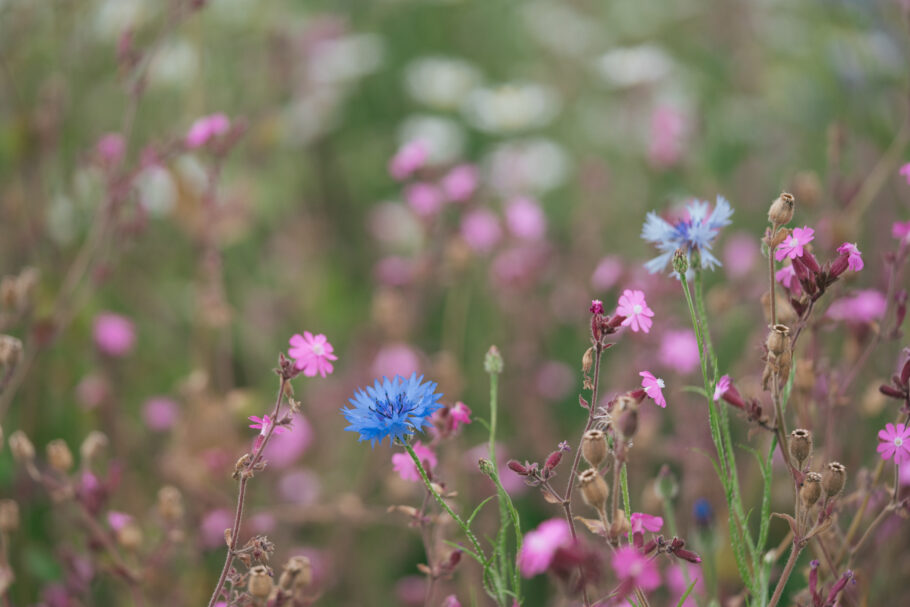
This slender, gangly plant has small dusky pink flowers. The stem and leaves are downy which makes them soft to the touch and greyish to look at. The tubular flowers form long, dry seed pods full of tiny black seeds. They are a common sight in verges and hedgerows in summer.
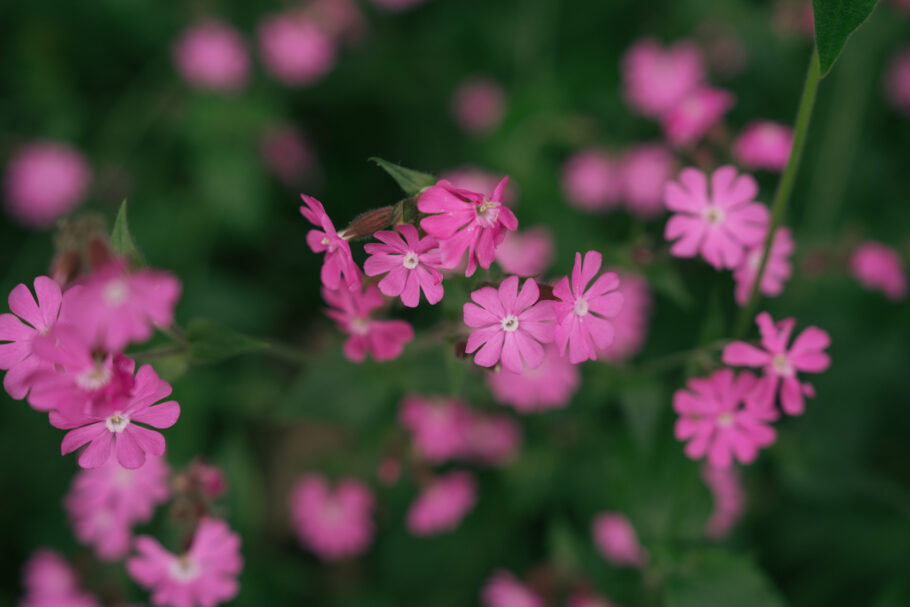
The small vivid pink flowers are soft and fluffy to the touch. They sit above large, hard round bases, earning them the name ‘hardheads’. Their leaves are hairy and the stems are rough to the touch. The flowers are loved by bees and other pollinators.
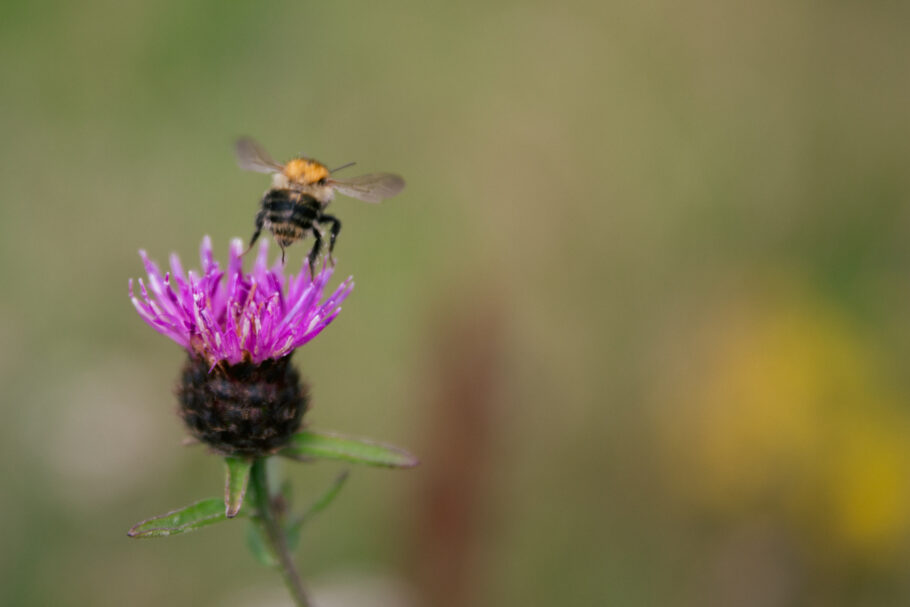
The dainty soft blue flowers are star shaped with many petals. It is one of the most graceful additions to verges in summer. The stems are wiry and coarse to the touch, contrasting with the softness of the flowers. They are loved by pollinators.
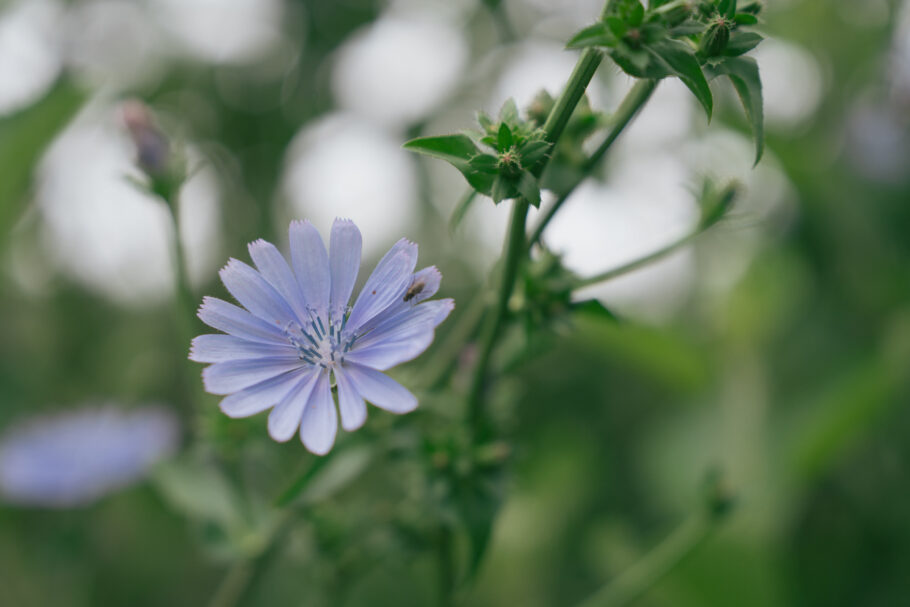
The soft pink or mauve flowers are large and funnel shaped with a charatcteristic notch in the ends of the petals. Their leaves are hairy and the stems are rough to the touch. They produce a sticky sap, the original source of marsh mallows.
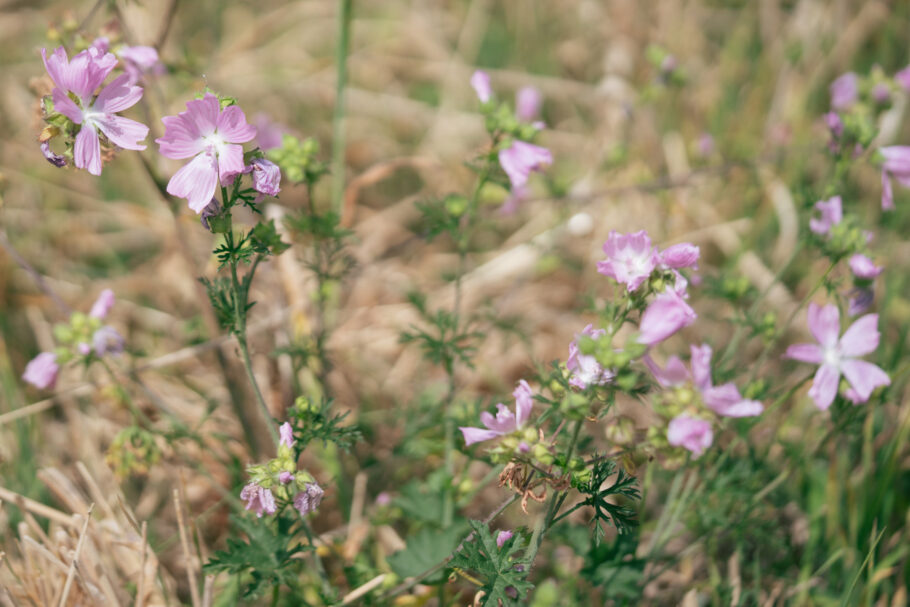
- ST plants for flowery grass