As the inclusive landscape architect here at Sensory Trust, I have advised on and designed a wide range of sensory gardens, from small community spaces to large care home landscapes. Sometimes this involves developing the design only, other times I remain involved through the construction phase.
The variety of this work has given me a good idea of the sorts of challenges that projects can face in relation to accessible and inclusive design. The places, budgets and people may vary, but these challenges remain quite consistent. I will share some of the most common ones here, along with some ways of avoiding and fixing them.
In my experience, some of the most significant challenges arise when the design transitions from plans to the building stage. This is a big jump. Things can look great on paper with accessible layouts and carefully crafted inclusive experiences, but there are inevitable changes when dealing with a real site, and tweaks are often necessary.
I will share some of the big issues I have observed during garden construction that have ultimately compromised accessibility because these aspects weren’t given sufficient priority. Avoiding these is important to ensure that you end up with a sensory garden that everyone can enjoy.
The bottom line is, you can have the most beautiful sensory garden design, but if it ends up being inaccessible, people won’t be able to use it. Making changes during construction, even small ones, can have a massive knock-on effect on the design’s original intentions for accessibility.
When a project manager or client prioritises accessibility, it shows in the results.
Accessibility needs to thread through all building works. It means keeping in mind who will be using the garden. For example, how someone will navigate the space if mobility is an issue, if they have partial sight, or if dementia and memory issues are a consideration. It relies on keeping an eye on any changes to details like surface materials, path gradients, and widths and referencing them all back to the end user.
There will inevitably be changes during construction. Some of the most challenging ones involve gradients and finding the most accessible solutions.
One design project I was involved with had an issue arise at the building entrance. In contrast to the levels on the design drawings, the reality on site was a threshold that would create a path into the garden at a gradient well in excess of recommended limits. The potential consequence was a major access barrier into what would otherwise be an accessible garden space. The solution came from the client supporting a review of the garden path layout, and after subsequent re-modelling of the garden layout, an accessible gradient was achieved. This couldn’t have been achieved by addressing the issue only at the building entrance, but rather by taking a wider view of the site.
I have also seen situations where site changes have been made without consulting the designer. In one example, the introduction of a step in the main route made the garden inaccessible and hazardous to many visitors, and an expensive and unattractive retrofit ramp had to be built. This compromised the final result. Yet it could have been resolved quite simply by undertaking a design review during construction.
The important learning is to ensure that the construction phase includes regular reviews of accessibility in liaison with the designer, and clear direction from the client that access is a key priority.
It is essential to have a realistic contingency in the construction fund. This ensures that potential changes can be assessed and solutions implemented. It also allows for extra time with the designer to resolve potential access barriers due to any unforeseen changes along the way. Money spent on resolving access issues before or during construction is much cheaper than retrofitting afterwards.
Despite survey work, there are times when unexpected discoveries arise when breaking ground. Hidden pipes, mine shafts, and ground instability can all cause problems and add time and cost to the build phase.
We are probably familiar with the idea that builders won’t give a fixed cost for foundations because they can never predict what lies underneath the surface, and gardens and landscapes can be the same. Builders and engineers are great at finding solutions to these issues, but don’t necessarily have the experience to foresee the impacts on accessibility.
A care home garden I designed discovered a large underground empty storage tank during the build, right underneath a path route! Moving the path and creating a short ramp had been suggested by the contractors, but after discussions with the engineer, we all agreed the safest and most cost effective option was to relocate the path slightly. We retained the accessible gradient by doing some additional land-shaping whilst the heavy machinery was still on site.
Regular contact between the designer, builder and client is key. This helps ensure that the design goals are still met and appropriate and cost-effective design amendments can be made. As designers, we need to be flexible and responsive to any problems that arise. Designs change, and that's ok.
Changes are likely to continue, not least because the nature of a sensory garden design is that ideas will evolve. New stakeholders, changes in staff and other ideas can all influence mid-design changes. For example, there may be a request for the size of a gathering space to increase. This may not come with an understanding of the impact on access and sensory experiences, such as path gradients, space for screen planting and impact on quieter areas. Continued contact between the client and the designer is recommended, where possible.
As prices of materials rise, labour costs change or unexpected additional expenditure arises, there will always be an element of projects trying to save money. Accessibility is often the victim of these cuts. Shortening paths to save money can create steeper gradients, while changing from a firm, 'bound' surface to a cheaper, looser gravel can compromise safe and easy use. Removing seats on the promise of adding them later relies on future budgets that may not materialise.
Reducing the quality of materials for features such as handrails and steps also impacts accessibility. The materials will be less durable and usability will reduce as they degrade. The cost savings made at the building stage will be met with more expensive maintenance.
While it is difficult to predict how much costs are likely to rise, in my experience, they almost always do. Therefore, a contingency is important.
It is also important to ensure that accessibility is kept as a priority when cost cutting decisions are being made.
Simplifying or phasing the design can be an effective way of responding to budget issues. However, it is critical to keep the essential access elements, such as gentle path gradients, good quality seating and handrails. In my experience, fundraising is more effective when a robust, high-quality framework has been established.
By honouring these principles through all stages of the design and build, your garden will not only meet regulations but will be the wonderful, beautiful and accessible-for-all sensory space that was your original vision, and which may have been promised to others.
People may want to contribute to a sensory garden, especially if it is being developed in their immediate environment, such as a care or residential setting. I have found that this works best if people can be involved early on.
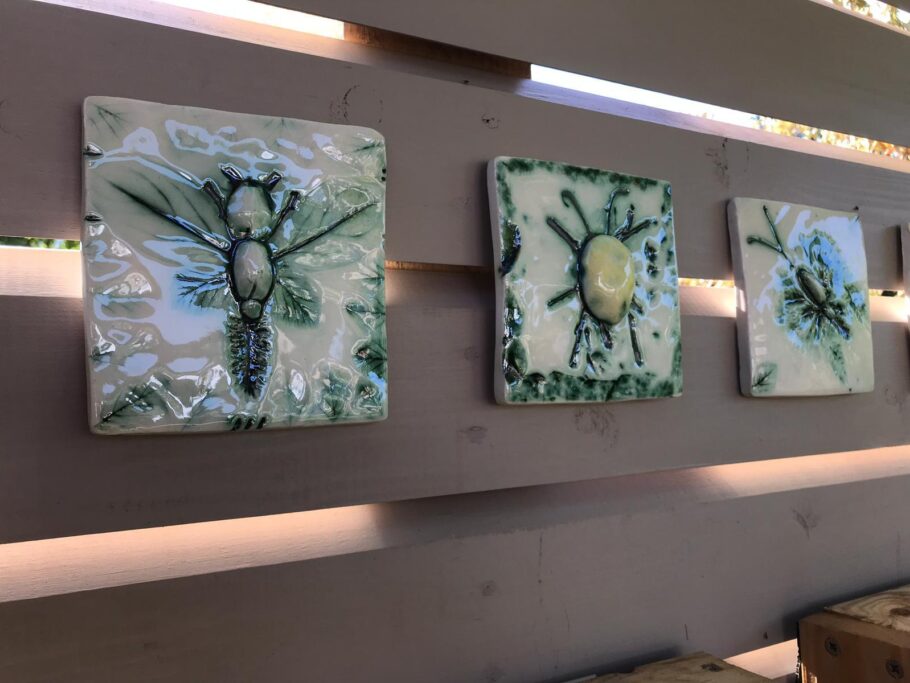
When I develop sensory garden designs, I always include ideas early on for how people can effectively contribute. This can include running workshops where people can make features or artwork to add to the garden. One example that I've seen work well is community members making ceramic tactile tiles for a garden wall or the arms and backs of garden benches. Working with an inclusive community artist is a great way to make this happen.
Enthusiasm for a new garden often inspires generosity and people wanting to gift plants. While this encourages people to get involved, it can be challenging for the design and risks adding ones that are toxic, spiky or just not suited to the site. I always issue a planting list with any design to give guidance and reassurance.