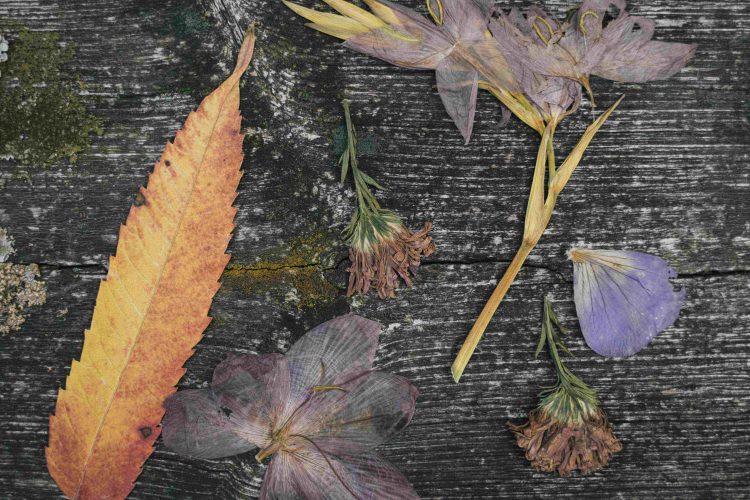
Pressing is a great way of transforming the beauty of fresh flowers and leaves into long-lasting treasures. The effects can be simply stunning. They lend themselves to a wide range of creative uses - decorating cards, candles, paper, lanterns - and you'll find all sorts of great ideas on the Internet. We focus on flowers and creative activities that bring sensory interest through qualities like scent, texture, colour combinations and memory associations.
Pressing is very straightforward. It can be as simple as putting flowers between the leaves of a book, as shown in this short how-to film.
The technique is very easy, here are the basics:
- Collect flowers from your garden or outdoor space. Think about colours and textures. Most flowers work well, ferns and grasses can give interesting results, and consider plants you might overlook as weeds. It's trial and error to find out which ones work best.
- Get a flower press or a pile of heavy books.
- Blot wet leaves and flowers to dry them.
- Trim larger flowers or stalks so they are not too bulky.
- Arrange them on a sheet of kitchen roll or paper, and cover with another sheet.
- Add card and place under a pile of books or in a flower press.
- Wait about a week for the flowers to dry, then open up and have a look.
A simple way of making flowers and leaves last is to soak them in glycerin. Glycerin, or glycerol, is a non-toxic colourless liquid made from plant oils or animal fats (you can buy a vegetable one). It is often used in skincare and food, such as icing and you can get it in main food stores and pharmacies.
When flowers and leaves are soaked in it, the glycerin replaces the moisture in the flowers and leaves and this keeps them pliable and colourful for a long time. We have leaves that we soaked two years ago and they are still looking good.
How to use a glycerin soak:
- Make a solution of one part glycerin and two parts warm water.
- Cut flower stems and remove the leaves unless you want to preserve them too. Place the cut flower stems into the liquid, keeping the flowers above the surface.
- Collect leaves, choosing ones with interesting colours and textures that you would like to preserve. Submerge the leaves in the liquid.
- Leave for 2-3 weeks in a cool place, this may take longer with tougher plant material. You can remove them when their texture and colour have changed, indicating that the glycerin has been absorbed.
- Remove and blot on kitchen roll to dry them.
You can use this technique as a precursor to pressing flowers and leaves, helping them last longer.