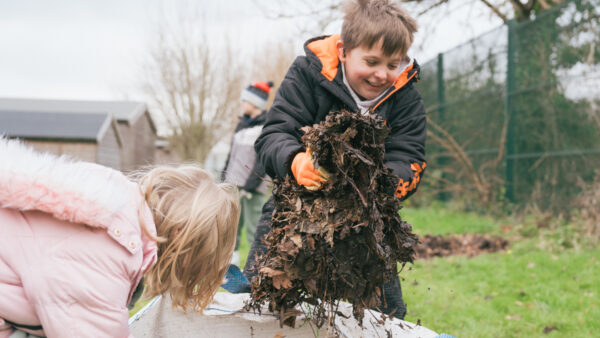
A sensory trail has a series of experiences along a route designed to engage the senses and collectively immerse people in a multi-sensory journey. Sensory Trails are really useful for quickly and easily transforming an outdoor space, giving visitors a journey, a purpose, a route to explore.
They are commonly used in all sorts of outdoor settings - city parks, farms, woodlands, schools, hospital and care home gardens. They can also be great indoors, too. We've seen some fantastic examples in schools and museums.
Sensory trails are often planned specifically for people with disabilities, especially people with sensory impairments, but in reality, encouraging people to use more of their senses is of benefit to all ages and abilities. Sensory trails have a wide appeal and can be enjoyed by everyone.
Sensory trails can
- give people the opportunity and the excuse to listen, touch, smell and look, more closely
- bring a place to life for all visitors, including people with sensory impairments
- encourage physical activity
- tell a story, weave a tale and bring a myth to life
- be the basis for an educational experience, facilitating learning outside the classroom
- build memories and make connections
- open up eyes, ears and nostrils and get hands out of pockets
Sensory Trail Markers are a simple, low-cost solution to creating sensory trails and sensory walks in any outdoor setting. The markers are Waymarker style all-weather discs with drill holes that can be screwed, hung or tied to most natural objects. Featuring nine different images, they are designed to highlight sensory stimuli and lead people on a fun journey of discovery.
The kit contains markers and an instruction booklet - all you need to create your own sensory trail. The markers are reusable, so you can change and adapt to the seasons.
We know that sensory gardens and sensory trails can be very costly, involving significant investment in new infrastructure and design. Even small-scale projects can end up costing a few thousand pounds. Having seen the frustrations of people wanting to put their ideas into action, but with limited budgets and time, we were keen to provide an alternative. We saw the need for something that would be quick and easy to install, low-cost and flexible so it could be used again and again in different settings or with different groups and at different times of year. This led us to create Sensory Trail Markers.
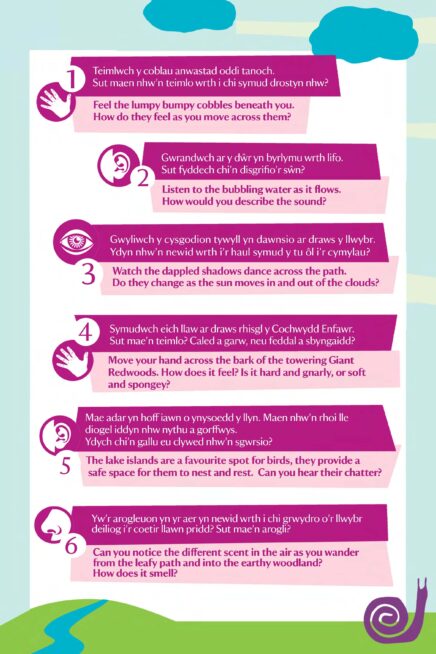
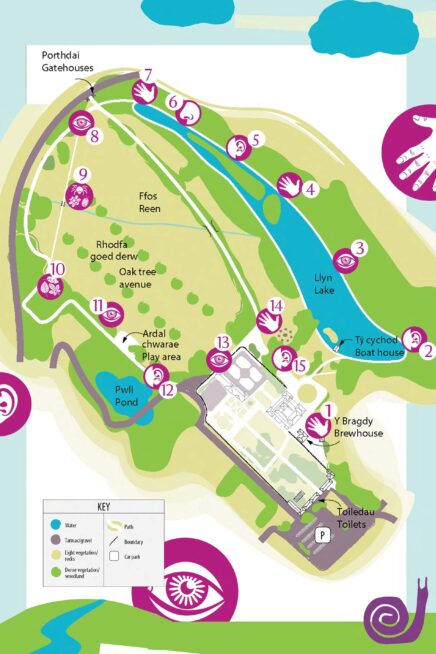
Tredegar House in South Wales wanted to create a sensory trail around their parkland. They wanted to highlight some natural sensory features to their visitors and encourage them to explore the grounds using all of their senses. Having purchased one of our Sensory Trail kits they went on to licence the images in order to create a digital map for their visitors.
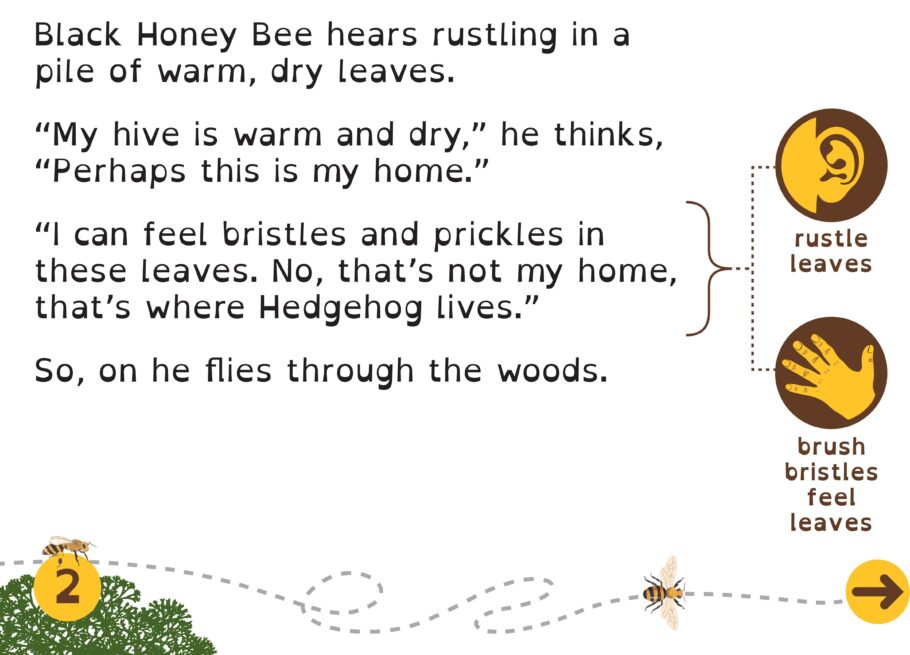
The sensory story trail at Heligan used simple text accompanied by sensory trail markers and sensory experiences to tell the story of a black honey bee blown off course. The story tells of how the bee discovers the wonders of the woodland and the homes of other creatures that live in the woods as she tries to make her way back home to the hive. The trail was used to encourage visitors to engage with the woodland environment through their senses as they followed the story of the bee. The markers denoted sensory highlights at each stage of the story giving permission to sniff or touch or taste each experience and the arrows kept people on track without having to use paper maps.
Information and Graphics
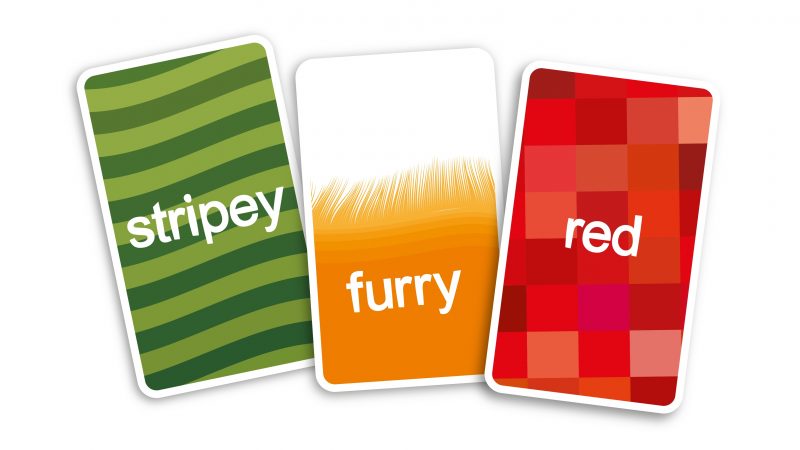
Our inclusive information and graphic design service creates beautiful and accessible materials, from visitor information to sensory resources and games.
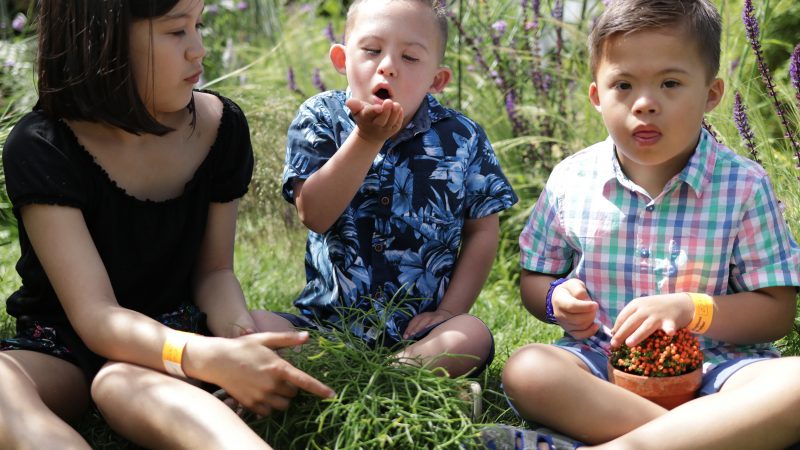
Projects
Sensory Trust projects apply our approaches on the ground and provide ideas and techniques to share.
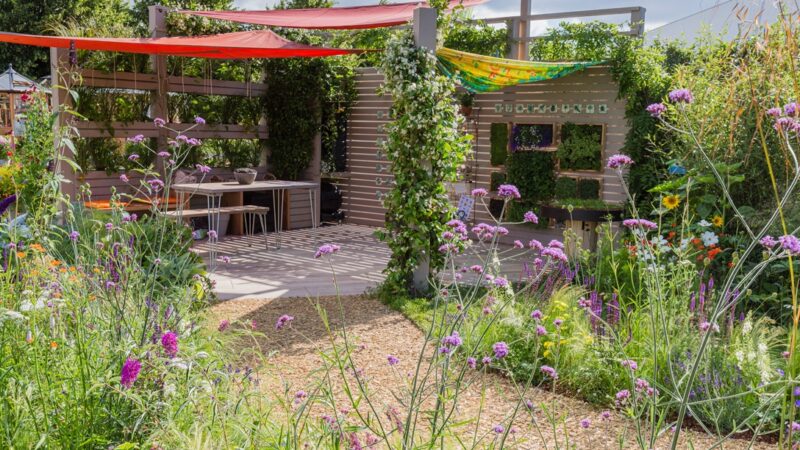
Sensory Gardens and Trails
Our design service will help you create a beautiful new sensory garden or add sensory layers to an existing one.