
This guide is designed to help land managers and owners improve accessibility of their sites, routes and facilities so they can be enjoyed by people of all ages, circumstances and backgrounds. It addresses accessibility in its widest sense, framed by an inclusive approach that embraces all the protected characteristics identified by the Equality Act (2010).
The guide has been produced by Sensory Trust in collaboration with, and on behalf of, Natural England and Natural Resources Wales, as part of their commitment to ensure equality of access to the outdoors It combines the previously separate England and Wales versions of ‘By All Reasonable Means’ (BARM) and has been updated to align with the ‘Outdoor Accessibility Guidance’ 2023 which is a source of more detailed guidance and specifications.
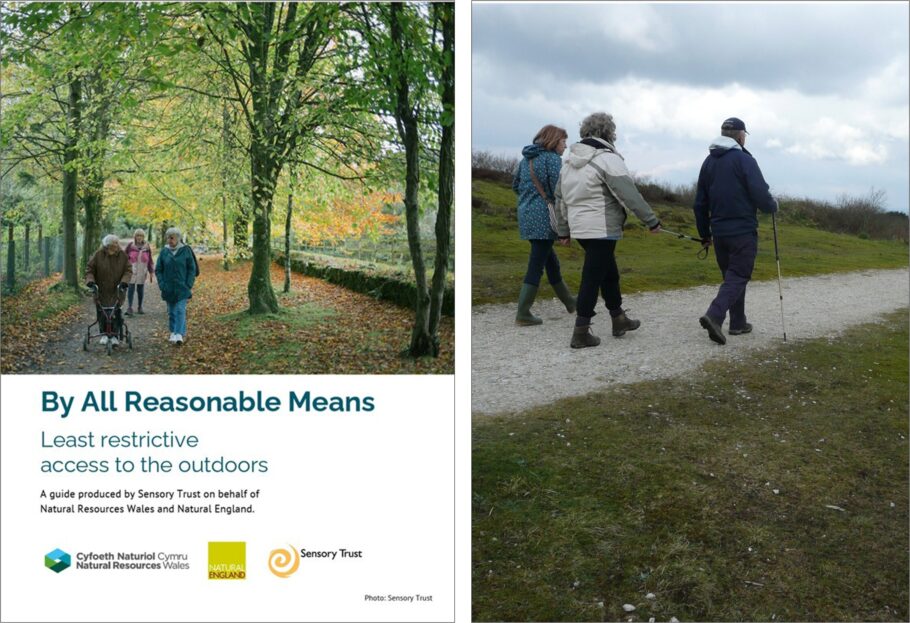
This guide is for organisations, owners and managers who are responsible for providing public outdoor access and recreation. It supports a wider collection of policies and codes of practice being developed by both Natural Resources Wales and Natural England to demonstrate their positive commitment to equality, diversity and inclusion within all areas of their work.
By All Reasonable Means is based on Least Restrictive Access, an approach that aims for the highest standards possible for a particular piece of work. In the absence of statutory standards for outdoor access improvements, the guide shows how owners and managers can identify standards and techniques appropriate to their site.
The guide balances access with the conservation of natural heritage. It acknowledges the reality of limited resources, and provides a realistic, practical and effective approach to encourage more action by managers and owners. The aim is for more access in more places for more people.
It also incorporates the Access Chain, a tool developed by the Sensory Trust to outline the different parts of the visitor experience, from decision to visit to the experience on site and the journey home, and the connections between them.
Image credit: Natural Resources Wales