Our shared heritage
Our historic landscapes and buildings are essential links to the past and important touchstones for the future. Yet it can be challenging for everyone to connect with heritage. A lot of our historic fabric wasn’t designed with accessibility in mind.
If people are to connect with heritage places and spaces, they need access, not just to the fabric, but to the stories and spirit of the place. This is why our work aims to improve access and create inclusive, sensory experiences. It opens up experiences to people of all ages and disabilities.
Inclusive heritage means more access for more people and richer experiences for everyone. Wider access and sensory engagement with heritage has been at the heart of the Sensory Trust's work for over two decades. Our guidance, access reviews and sensory engagement techniques are designed to help heritage owners, managers and designers enrich their heritage experiences and open up access to the widest range of visitors.

The importance of connecting people with heritage
We believe that interacting with heritage through all of our senses is key to making personal, long lasting connections. This applies to heritage buildings, landscapes and cultures and traditions.
Our multi-sensory techniques are designed to engage and connect more people with heritage. They include printed or online sensory guides that share the experiences of a place through the different senses and sensory trails that make journeys more immersive. Tools like sensory mapping help people review and record places in new ways. They all take the focus away from being exclusively visual and make experiences richer and more memorable.
These techniques offer an innovative approach to accessing and engaging with heritage. Places such as King Edward mine and Geevor Tin mine are brought to life through personal accounts of the people who worked there.
Sensory rich interpretation makes richer experiences
Developing sensory rich interpretation with industrial heritage is proving to be a fascinating focus for us. Our work with industrial heritage venues in Cornwall has been opening up stories and messages to the widest audience. Working with people who face the greatest barriers to visiting heritage venues is key to this.
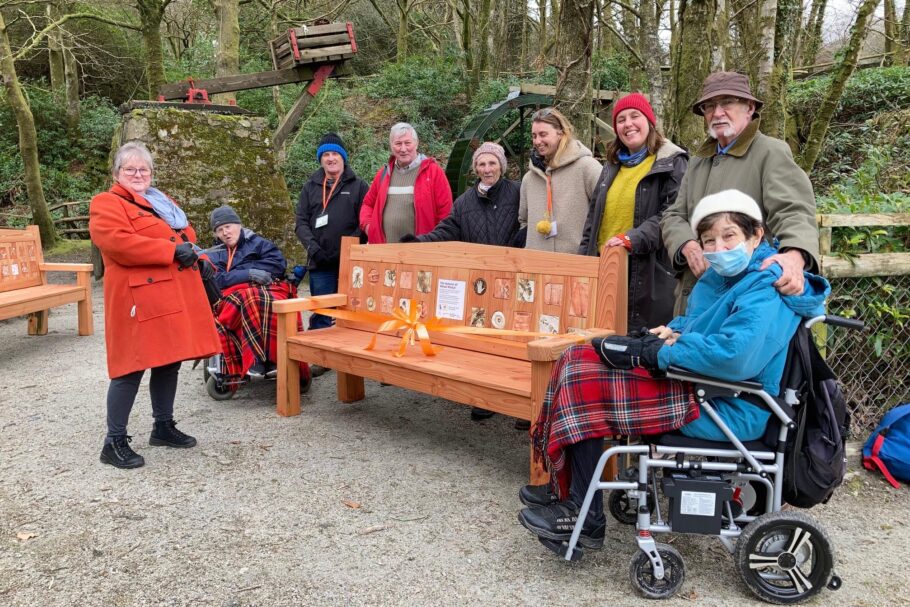
Exciting new interpretation such as a pause and reflect bench and sensory markers are installed at Wheal Martyn Clay Works. Sensory trails, sensory exploration tools, outreach activities and sensory stories remain with our partners Geevor Tin Mine, Hayle Heritage Centre and Kresen Kernow for everyone to enjoy.
Sharing the stories and fascinating facts of industrial heritage through sensory rich interpretation ensures that more people feel welcome and able to enjoy experiences of equal value, in ways that are meaningful to them. It’s about ensuring that families and friends of all ages can access and enjoy a heritage experience together.
Move away from heavy text
Heritage venues are keen for people to know more about their histories but it can be challenging to find ways of sharing information to best engage people. Complex, information-heavy interpretation can be inaccessible to many visitors.
By focusing on sensory experiences, we are creating opportunities for a wider audience to engage and connect with Cornwall’s industrial past and the natural heritage which is its legacy.
Using techniques like sensory trails and sensory stories, we are working with disabled children and adults to test and refine our ideas.
Our aim is to encourage visitor destinations around the country to rethink interpretation and move away from heavy text towards more sensory-engaging materials. We will be sharing best practices from venues around the world and producing guidance on how to make interpretation more accessible and engaging.
Sharing sensory highlights through a sensory guide
Sensory guides draw out the sensory highlights of an area to encourage all visitors to experience heritage through their senses.
Our Pilchards Pits and Postcards project created sensory guides and digital apps celebrate the oral history and natural landscapes of four unique heritage outdoor environments in Cornwall.
By guiding people through a story walk of an area the apps offer an innovative approach to accessing heritage. Places such as King Edward mine are bought to life through personal accounts of the people who worked there. The unique sounds of the machinery and the songs of the workers give a fresh perspective on the heritage of the landscape.
- Sensory guide to Newlyn
Downloads
Guidance on improving access to natural heritage
We create guidance to support organisations plan and implement access improvements to outdoor routes and sites. The 'Outdoor Accessibility Guidance' provides standards, design and management principles, and examples of good practice. It provides a benchmark for everyone working in the natural heritage sector, from open countryside to visitor destinations..
We released the updated version of 'By All Reasonable Means' in 2025, the result of a longstanding collaboration with Natural England and Natural Resources Wales. This combines the previously separate England and Wales versions into one guide.
We apply this guidance through our access review consultancy service, balancing the need to protect natural heritage with opportunities to enhance accessibility.