There are key design principles that underpin the design of any sensory garden so that it can be enjoyed by the widest range of people and in the ways intended. It's important to address these through the whole design process.
If people are going to enjoy the garden they will need to be able to get to and around it, so think about details like path widths, surfaces, and gradients as well as access to toilets and opportunities to sit and rest. Our Access Chain helps you review access through the perspective of a user. Our access guidance sheets contain useful guidance on access issues like path surfaces, gradients and steps.
Also consider access in terms of reaching features within the garden - height and proximity of plantings, water, sculptures etc - so everyone, including wheelchair users, can explore up close. This is important for everyone, including people with sensory impairments. Sensory design calls for extra effort to make sure different experiences are in reach. For example, trees may be deliberately planted near to a path so the bark can be felt rather than setting it back as it would in a standard design.
Sensory gardens call for different maintenance techniques too. For example there may be a deliberate policy to retain lower tree branches so children can balance and climb on them and to prune shrubs and trees into interesting shapes. Or to train fruit trees along wires to keep them at a lower height for picking.
It is also important to identify any particular user needs that you are aware of. For example, if the area is mainly for children it will be important to make sure that the overall scale and take this into account, keeping in mind both disabled and non-disabled children.
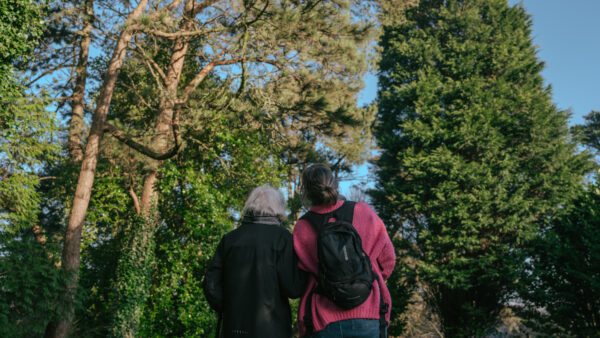
When designing for people with specific disabilities, think about who else might share the space, especially friends and carers. If they enjoy the garden they are more likely to encourage others to use it more.
Comfort is very important and often overlooked. Seating is one of the most important and most neglected features in landscape design. Seats make a space more accessible to people who tire easily, and more enjoyable generally by giving people more chance to pause.
Shelter from sun is important and the ideal is to create a range from solid to dappled shade so people can choose what best suits. Shelter from rain and wind are important too and will extend the period of use. Temporary shelter (from pergolas, fold-out canopies etc) makes for more flexible use and it's a good idea to incorporate fixtures in the design, like holes for pergolas and brackets for fixing canopies to a wall.
Access to toilets and changing facilities is a critical issue. If you don't have scope for toilets as part of the garden development it is important to consider where the nearest facilities are and how you will let people know. The Changing Places website has information on accessible changing facilities.
Sensory gardens are usually places where the whole idea is to encourage users to explore, touch, pick, smell and crush plants and interact with objects. This places challenges on the design, particularly a need to make things robust and to choose plants and materials that can tolerate the inevitable damage from inquisitive hands. Where resources allow, you could include disposable plants that get regularly replaced, or you can choose plants that are tough and can withstand a lot of handling.
An essential aspect of the design is thinking about what range of experiences will be available in the garden. People must be able to get around and so the routes must be accessible, but it's important to think about how these journeys can be made interesting and varied. For example using different textured path surfaces, creating areas of shade and avoiding straight, uniform routes.
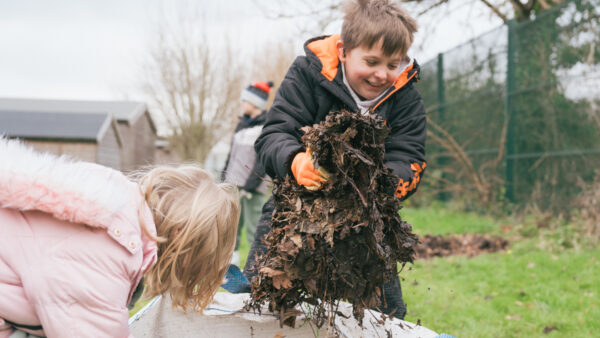
Successful design relies on imaginative use of materials and opportunities. Consider ways of concentrating or 'stage managing' natural events, for example by introducing nest boxes and feeders so that birds can be seen or choosing nectar-rich plants to encourage butterflies and other pollinators. Think of ways of bringing in materials that would otherwise require venturing further afield, such as piles of autumn leaves, a load of straw, bark chips, flowers etc.
Involving an artist or sculptor will add other creative elements and can help provide all-season sensory experiences. Including storage space is useful for things like extra summer furniture, equipment for creative making and play, temporary shelter, and items used in other outdoor activities. Water points give the option for introducing water features, or water play. Electricity points are useful for adding lighting, music etc.
In some gardens it might be appropriate to introduce more challenge in selected areas that are not part of the main route. This could include the provision of slopes, steps or other features to test or stretch mobility skills.
It is worth remembering that there are many sensory experiences we have that are not formally categorised as one of the main five, for example a sense of balance, temperature, space and enclosure. The following lists are intended to offer ideas for a wide range of sensory experiences.
Orientation, gravity and balance
Aspects of path design, such as width, change in direction, branching, slopes and ability to see a destination or end point all influence speed of travel and sense of mystery and invitation. Therefore paths in sensory gardens and trails can be seen to have much more potential than simply providing direct access. Orientation skills may also be developed by providing things for people to stand on or climb up (logs, trees, platforms, bridges, stages) that test or develop balance and which act as markers in the landscape. In education programmes, the objective may be to introduce such basic concepts as up, down, high and low (this may be done by incorporating objects that can be repositioned such as hanging baskets and mobiles).
Colour
Plants and other materials offer a complete spectrum of colour with the added delight of changes throughout the different seasons. Include flowers, leaves, bark, berries, lichens, mosses, path and wall surfaces and art works in your plans to create interesting colour effects through the year.
There are so many ways to play with colour, here are some ideas:
- Choose colours that contrast well against each other (e.g. white flowers in front of a red leaved shrub) - this will add interesting visual patterns and will particularly benefit visually impaired people who are still able to detect well contrasted colours.
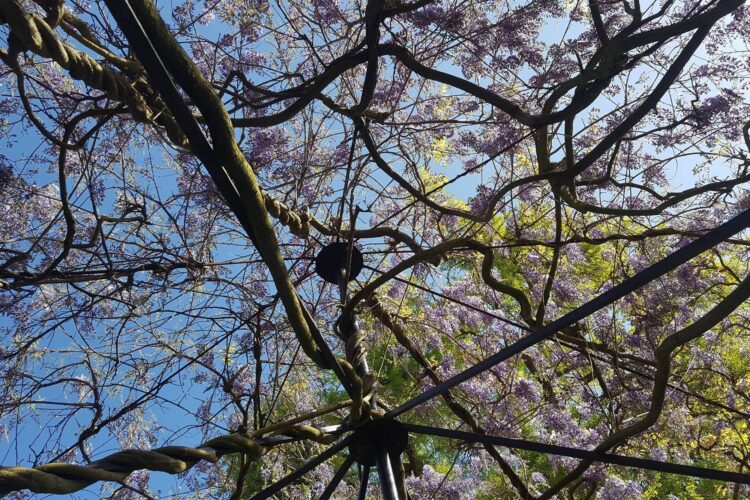
- Create a splash of single colour for dramatic effect – e.g. a pergola/archway covered in mauve wisteria, a swathe of bright orange marigolds in a border, a lawn turned into a flowery mass of daisies.
- Select specific colour schemes to create different ambience - as a general rule bright oranges, yellows and reds are associated with energy and stimulation while blues, greens and whites are more calming.
- Hard materials can provide a richness of colours and textures (stone, old brick, gravel, slate) or simple materials can be used to create patterns of colour (mosaics, murals, paving). Also consider changes in appearance and colour of materials when wet and dry (pebbles in water).
Touch
If we were to pick the most important sense for exploring a sensory garden this would be the one. And for sighted users too. It is often only when we explore with our hands that we get to appreciate the real nature of things - how exquisitely soft the leaf is, how surprisingly heavy the fruit, how dry the moss despite how soft it looks. For all garden explorers the opportunity to touch as much of the garden as possible is important.
The outdoors is full of different textures and people with visual impairments in particular rely on these to interpret the environment. The challenge is to design for a good diverse range. Here are some options;
Introduce textures into the fabric of the garden - add variety to wall surfaces, path surfaces, sculptures, seats, tables. Think about materials for new features and consider adding objects to existing ones.
Add temporary materials - bark mulch, leaves, straw - to add variety to materials to sit, walk, lie on.
Involve an artist to add tactile interest through permanent and temporary installations.
Choose plants with interesting textures in their flowers, leaves, berries, seeds, bark, twigs.
Include water and giving options to dip hands (and toes?), ideally include moving water for added interest and options for water play, floating objects etc.
Make a list of textures (rough, smooth, ridged, hairy, bumpy, soft, squidgy, fluffy, etc) and note ideas for each (rough twigs, stones, bark; smooth petals, slate, leaf; fluffy grass flowers, dandelion seed head etc). This is great for getting others involved in thinking of ideas.
Many non-disabled people underestimate the value of texture for engaging with the environment and can learn a great deal from studying alongside those with visual impairments.
Pattern and shape
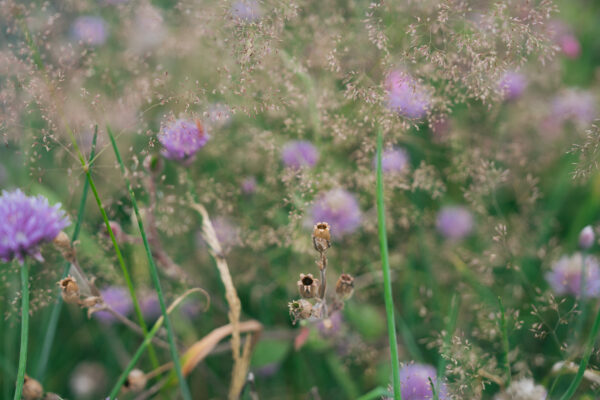
Patterns can provide fascinating effects and can inspire art work. Regular patterns can be provided by things like brick work, paving, fencing, dandelion clocks and pine cones. More complex patterns from many natural materials eg tree bark and variegated leaves.
Including objects of different shapes is especially useful for a sensory garden intended to aid learning. For a collection of simple, distinctive shapes consider leaves (sycamore, beech, ash), fruits (apples, currants, rose hips), flowers (daisy, giant onion, bell flowers), stems (bamboo canes, dead nettle, grass), paving (hexagons, squares, triangles) and plant containers (round, square, cubic, rectangular).
Also consider; weight (light bark, heavy clay etc.); temperature (sun-warmed water, cold shaded water; stone next to soil); wet and dry (moist and dry soil/sand, freshly shed leaves and older dry ones); contrasting densities (hard stone and soft moss).
Movement
Movement is useful for sparking and sustaining attention, especially if it is combined with sound. It can be stimulating or relaxing, depending on the source and setting. There are many ways of combining movement with sound. Consider; trees (aspen, willow, white poplar), grasses, mobiles, chimes, animals, water, moving sculptures. Locate some within reach so that people can activate them. Place wind-activated items in places likely to receive some breeze! Be cautious with wind chimes as they can be over-powering and irritating especially in a small space.
Visual contrast
Particularly valuable for people with visual impairments who have some residual sight. Consider how contrast can be achieved in planting designs (through leaf and flower colour combinations), on hard surfaces (art work, painted markings on hard surfaces) and in art materials.
From an accessibility perspective, good colour contrast will help visually impaired people find their way around independently. Consider contrast of paths and edgings, features of particular interest, furniture, signage, waymarking features and any obstacles on routes.
Sound
Organisers of nature studies often find listening activities to be a good way of calming people and tuning them in to their environment. Children often need to be encouraged to listen to sounds, especially to more subtle ones.
Consider both sounds that occur naturally and those that can be activated by people. Natural sounds include; leaves rustling in the wind, birds singing, water tricking/dripping/splashing, rain on an overhead cover.
Activated sounds include; splashing water, striking chimes and sound sculptures. Deaf people will be able to sense vibrations and percussive sounds and these can be provided through sculpture and features such as deer-scarers (Chinese tapping water features). "Sound fences", activated by dragging a stick along a series of lengths of tubing or piping are melodious and fun.
Smell
Although most attention has been given to scented plants there are many other materials that have distinctive and interesting smells. Options include a whole range of familiar smells (pond water, wood shavings, autumn leaves, cut grass). The effects of water on smells can be interesting, such as fresh rain on dry, hot soil or a tarmac path.
With plants, consider different types of scent: scents that fill the air and can be smelt without touching the plant (eg mock orange (Philadelphus), roses, winter honeysuckle, curry plant, cut grass, hay); Intimate scents where the flowers need to be investigated (violet, primrose, some Narcissus); Activated scents which are released when plant parts are crushed (most culinary herbs, scented geranium).
Another option is for people to try to identify the scents from different distinctive herbs, such as peppermint and apple mint, lemon thyme and curry plant. There can be interesting differences between people's abilities to detect the more subtle scents, such as violets and primroses, and in schools it can be a fun exercise to get children to run a survey of their class.
Do note that some plant scents can be a problem for people with asthma, particularly the more powerful scents and those coupled with flowering and therefore pollen release.
Taste
Taste can be a useful way of demonstrating where food comes from and showing the link between growing and eating. However, particularly with children, it is important to ensure that they remain cautious about unidentified plants. Compromises may be to restrict the choice to those food plants that are clearly recognised, such as apples, or ones that are grown in specific areas such as a herb bed.
Cause and effect
A range of practical landscape features can be used to get people involved. For example, interactive sculptures on which people can pull levers, press switches or activate touch-sensitive pads to produce different effects. Other possibilities include gear wheels, pulleys, balances and water which moves through a series of pools or channels. Such features can also be valuable in education programmes for demonstrating cause and effect.
Mood and ambience
Some areas are designed to be quiet and relaxing. Here the emphasis is on using a reduced range of sensory stimuli to create a comfortable and calming environment. Some schools and residential units have reported that such environments are useful for counselling.
A diversity of types of space can be achieved by using shade vs light, enclosure vs open space, sound vs quiet to explore other moods.
Spaces intended for more active engagement will have more sensory stimuli, including ones that prompt more active inquiry and action from people.