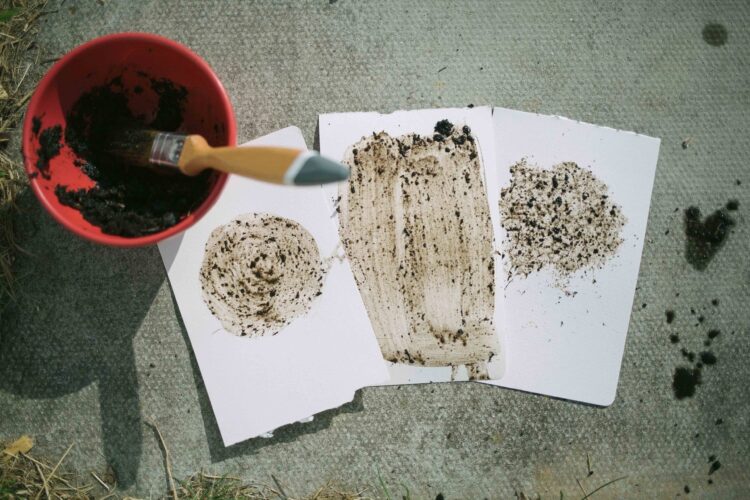
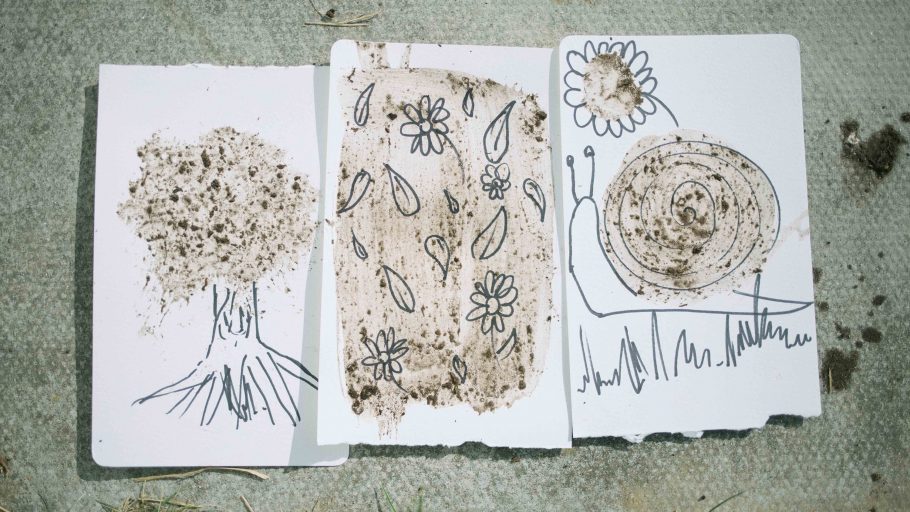
It couldn't be eaiser to harness the wonderful sensuous world of mud painting. Using free natural materials, it doesn't require experience or skills, and everyone will produce their own unique artwork.
It is also a chance to reconnect with an ancient craft. The earliest artist paints came from earth pigments and there are examples around the world of how people expressed their life stories through this medium. There are still artists who work with mud.
Experiment with mud from different areas to see if you can find different shades of brown, and see if you can find clay to add more greys to your art.
- Bowls
- A handful of mud* collected from outdoors and put in each bowl
- *note that mud is soil or earth that sticks together when saturated with water. You need a clay-containing soil and you can test it by simply adding water to some and seeing if you can mould it in your hand.
- Be sure to collect clean soil.
- If you don't have access to natural soil, you can buy a bag of compost or topsoil, choosing one that contains some clay such as a John Innes compost
- Heavy duty or cartridge paper, or a ground surface where you don’t mind it getting muddy or where it can be washed away
- Paintbrushes or make your own with nature, see our Painting by Nature activity
- Water
- Washing up liquid (not essential but it does make the ‘paint’ flow)
- Food colouring or paint if you want to add some colour
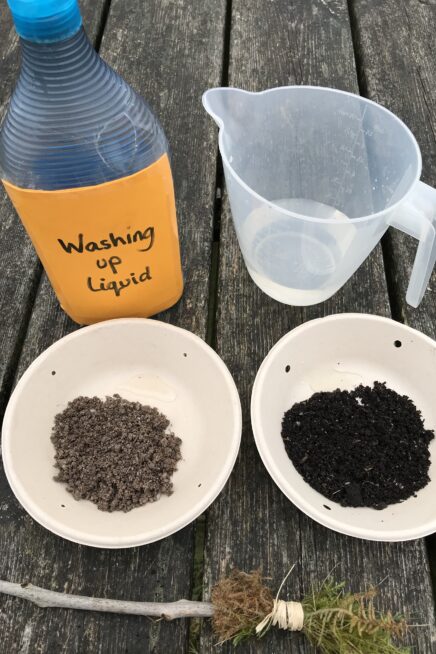
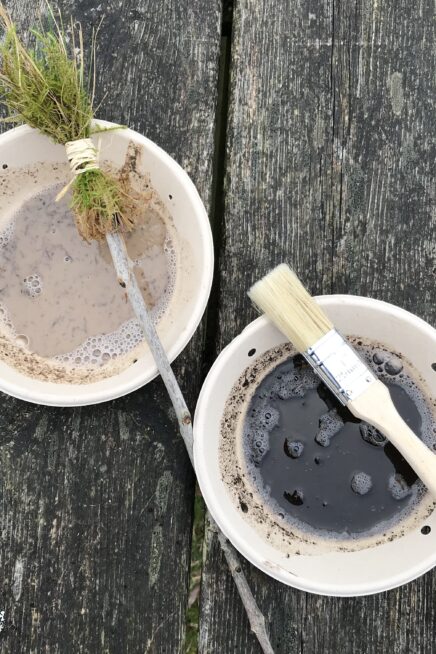
- Place a handful of soil in each bowl and mix with a little water to make a muddy consistency.(see note above about the type of soil to use)
- Preparing a selection of soils, including ones with more clay, will give you a more varied palette
- Add a squirt of washing up liquid for a better flow of paint
- Experiment with different consistencies (add more or less water) to see the effect it has on your painting
- If using colours, less mud, more water will bring out the best colour. Powder paint will give the best effect.
- Paint away!
- Sieve some earth to create a finer mix.
- Add an equal amount of PVA glue and water until you have a consistency of yoghurt.
- Use this to paint onto a canvas or cartridge paper.
- Use different soils to create different colours, or simply add food colouring.
- Leave to dry and you have a wonderful original piece of artwork.
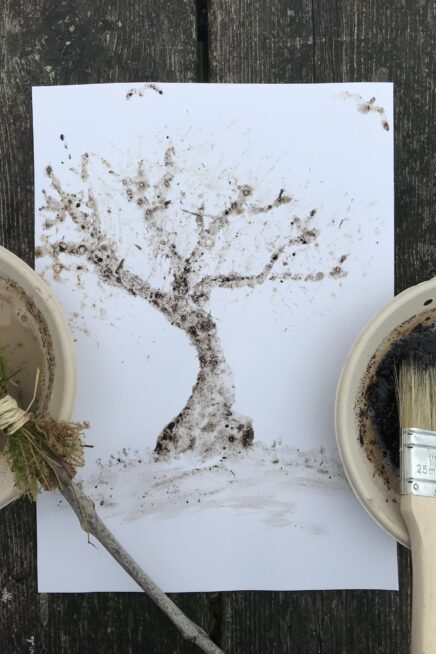
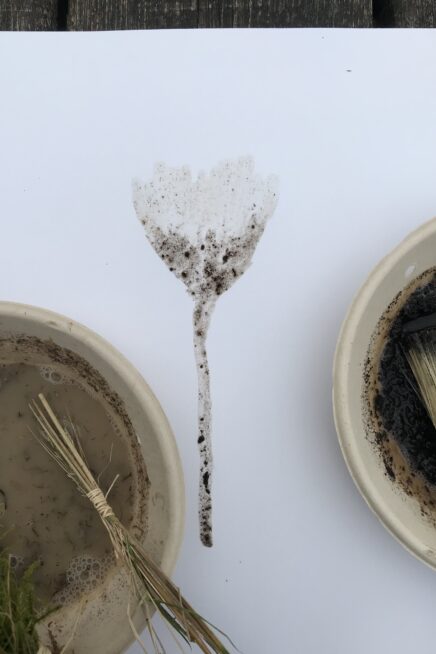
- Mud painting instructions