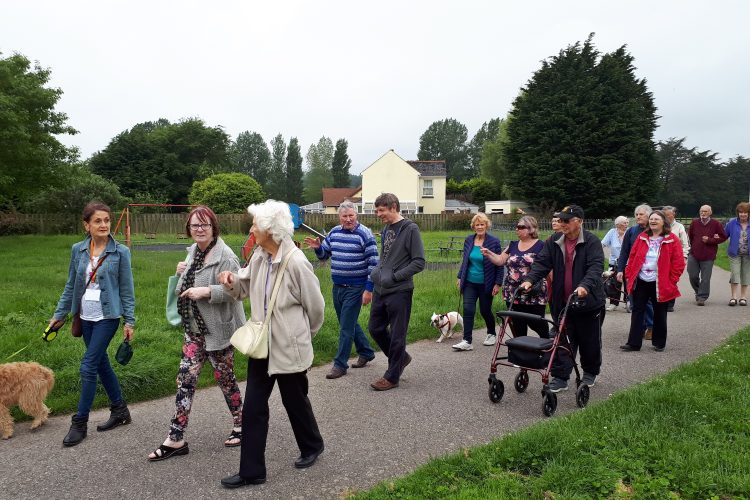
The Making Connections guide
Making Connections is a guide to making public greenspace accessible to everyone, regardless of disability, age or circumstance. There are millions of people in the UK who do not have access to public greenspace and the book examines the reasons, and offers solutions. With growing awareness of the importance of inclusive environments, the guide remains as relevant today as it was when it was written in 2001.
It is aimed at practitioners involved in the planning, design and management of public open space and anyone interested in making outdoor spaces inviting and usable for the widest range of people. It addresses issues such as:
- what motivates people to visit and get involved
- uncovering the hidden barriers to access
- the need for inclusive visitor information
- site design and management considerations
The Making Connections research study
The book is based on a research study that explored the barriers preventing older and disabled people from enjoying greenspace. Greenspace managers were telling us they had implemented access improvements but seen little change in the diversity of visitors. It was obvious that there were barriers still limiting access, but these hadn't been fully examined. The need for the research was clear.
We reviewed the literature, collected examples of good practice and gathered the views and experiences of disabled and older people and greenspace managers. Our national surveys targeted non-visitors and in particular disabled and older people who were keen to visit greenspace but were prevented by barriers to access. The aim was to work with disabled people to inform professional practice.
The results informed our work and as far as we know it is still the only survey of its kind.
Important learning about accessibility
Accessibility is a complex issue and relies on both physical factors (such as distance from home) and socio-cultural factors (such as people wanting to go somewhere and feeling comfortable there). These social factors are generally less obvious but often very significant in making disabled people feel excluded.
The Making Connections project was designed to address these socio-cultural aspects, in particular highlighting ways that greenspace can provide rich experiences and a means of disabled people connecting with their community and with their surrounding environment.


The User Survey
Most visitor surveys focus on people who are already using greenspace, less so on non-users. We wanted to find people who are excluded, either through choice or because of barriers, and the reasons why they are not visiting greenspace. This involved a postal questionnaire and interviews with disabled and older people.
The survey prioritised disabled and older people who are out-and-about but not necessarily visiting public greenspace sites. This would gather views of people who might well visit if certain adjustments or provision were made. There were few surveys of this kind to draw upon and to an extent the development of the methodology in itself was an important part of the research. For this reason, we felt it was important to include a summary of the survey questions and data in the publication.
Feedback from the User Survey identified the barriers that disabled and older people experience, the benefits and attractions that greenspace can offer as well as an insight into the ways in which age and disability can influence expectations, opportunities and choices.
The site survey
The Site Survey targeted greenspace practitioners and policy makers. The findings showed the attractions on offer, how site managers were responding to the disability community and what kind of good practice were taking place.
The site survey showed a lively mix of attractions such as attractive landscape settings, café and refreshment facilities, events and activity programmes. It also revealed that the demonstration of inclusive design was patchy, and it was rare to find complete sites showcasing best practice. Making Connections was produced to change this situation, and to help greenspace managers, designers and planners make their sites available to all visitors.